

Episode #421
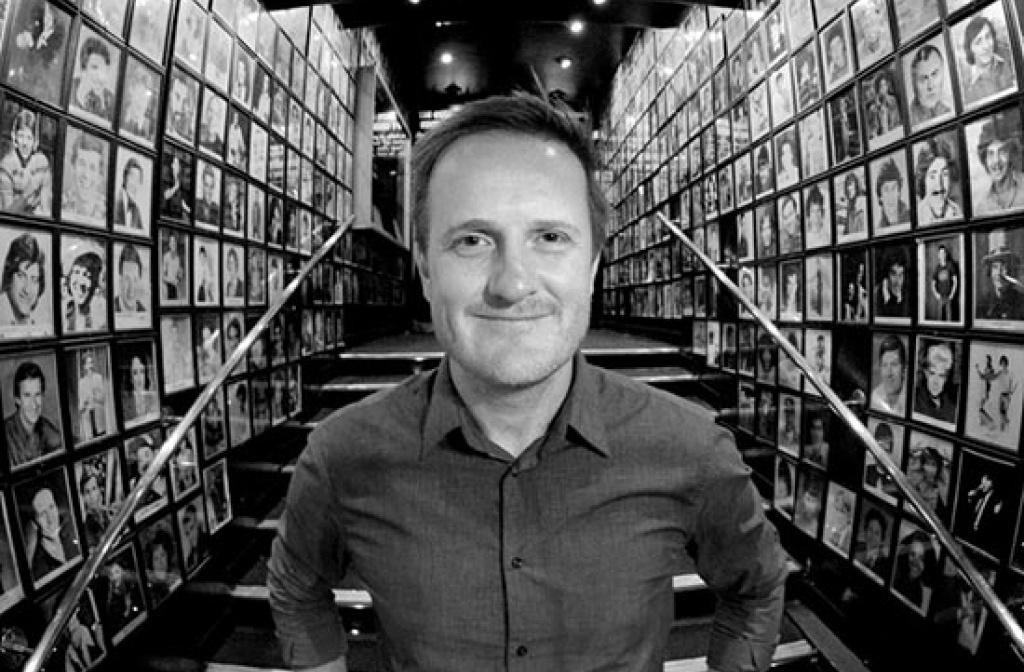
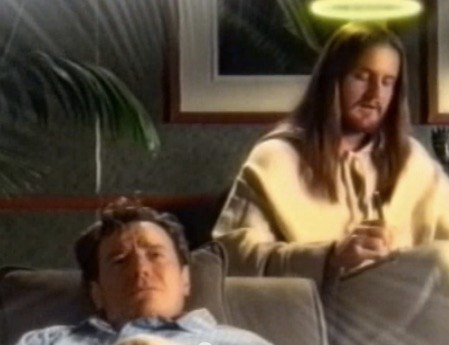
Matt Knudsen is one of those character actors with a face you can’t quite place, which is why the memoir he’s writing is called, “Have I Seen You In Anything?” One of Knudsen’s first big breaks in show business was playing Jesus Christ as a therapist to Bryan Cranston’s character in Malcolm in the Middle. He has since been seen in episodes of Boston Legal, Big Love, Men of a Certain Age, Key & Peele, The League, Crazy Ex-Girlfriend, NCIS, The Big Bang Theory, I Think You Should Leave with Tim Robinson, and plenty of national TV commercials. Knudsen is one of the first faces you see, in fact, as a patient of Jason Segal’s in the new Apple TV+ series, Shrinking. As a comedian, Knudsen has released three albums, performed on Conan and The Late Late Show, and earned millions of views for his Dry Bar stand-up special, Good News. Knudsen invited me into his home near Los Angeles to talk about his early life in the merchant marines, how running marathons prepared him for the grueling world of show business, and more.
If you’re not already subscribed to my podcast, please seek it out and subscribe to Last Things First on the podcast platform of your choice! Among them: Apple Podcasts; Spotify; Stitcher; Amazon Music/Audible; iHeartRadio; Player.FM; and my original hosting platform, Libsyn.

This transcript has been edited and condensed only slightly for your convenience.
Congratulations, Matt Knudsen. I had to ask you, because soon as I started watching — Shrinking, is a great new show, from Bill Lawrence and Brett Goldstein starring Jason Segel, Harrison Ford, Jessica Williams and special co-star Matt Knudsen, America’s new favorite Joy Boy.
You know, I have to say that part of the episode was improvised. We did this improvised therapy session. And I volunteered that from my life because that’s what my parents had called me forever. So to have friends and colleagues now calling me Joy Boy in some way, you know what I mean? It’s what my mom still calls me and she’s like, 80. It’s meta. Am I using that term correctly? It’s meta.
As long as we clarify that we’re not talking about the company owned by Mark Zuckerberg. We’re talking about the actual word.
Right. It’s meta, that it’s kind of existed in both hemispheres in my life. It makes me laugh.
So is this something that actually does kind of like sit with you, because it came up in an improvised therapy session? To be known as Joy Boy, was this while you were still in Hawaii, or after you’d relocated to the mainland?
No, no, my whole life. That’s what my parents had called me because growing up, and to this day, I kind of have like a pleaser vibe. You know what I mean? It’s like, hey, life’s a party: Can I freshen your drink? Is everyone OK? How can I? And I’m still that guy. But growing up, my parents, they would just tell me to do something, and I would behave and not be too problematic.
Do you have siblings?
I have two older brothers and a younger sister. So classic middle child! Pleasers, pleasers, but then, you know what had happened: We were doing the episode of Shrinking and Bill Lawrence was like, Well, hey, let’s just improvise a therapy scene. We did 10 minutes. Jason (Segel) is a phenomenal improviser and a great listener, and you’re just looking at him and you know, he’s really present and listening. And so Bill, he came by, Jason didn’t hear him, Bill goes: ‘When he asks what’s wrong, say it’s my mother again.’ So, in my mind, that was his suggestion for what this improvised scene was going to be about. So I was just pulling information, and it wasn’t like, ‘She slipped in dog shit!’ It was grounded, real, adding information. I think I remember saying something to the effect of like, ‘You know, my mom, she doesn’t want to use a walker, but she falls all the time. It’s so frustrating.’ And that’s not funny, but that’s just like, as your parents get older, there’s a certain age where they’re just like, yeah, you need some help.
We’re a very similar age. So, right, if our parents are still alive, we have to deal with that.
Yeah.
So are your parents still with us?
My father passed away in 2015, it was actually his birthday last week (in February). So there’s always that like family text or photos and like calls and checking in and my mom is still with us and actually, she’s social and outgoing and has friends and has all these other interests. Not that you ever get over the death of a spouse but she’s tries to stay active.
But how did she feel seeing you mention Joy Boy?
She laughed. Well, she just got Apple TV recently. And I told her about it. She watched it. Sean, there is no bigger fan of anything I’ve ever done than my mother. Anything that I’ve ever done, you know, she just thinks it’s great — and my wife, too — but like, my mom will always kind of chime in and let me know that we saw you on something…
I can totally related. My mom is listening to this right now, cheering me on.
We all are.
Going: Why aren’t more people listening to this podcast?!? This is the best podcast! OK, so I’m looking at all these medals on your wall.
We are in my home office right now.
All of these medals. These are not from the Merchant Marines.
These are not Merchant Marine metals. That is actually — I ran the Los Angeles marathon for 10 consecutive years. And the one on the far right is the medal that they give you if you do it a decade straight. It’s a replica of the Olympic medal they gave the marathon winner when the games were in LA in 1984. I got to like five or six or something like that, and they came out with this new medal — like 10 year challenge. I only had like three left. I was like, Well, I gotta do it, then! I was really surprised at how emotional I got when they gave me that medal on my 10th year, because when I think about the past decade, and you know how many things have happened in my life who’s with me who’s not, ups downs, all of it. It kind of like, was handed to me in this one moment of like, Hey, here’s the past decade to reflect on. Also, I had done it as a fundraiser for St. Jude. And it kind of became a thing that, you know, every year, people would reach out: Are you doing it again? To do it again, and again. So, it became bigger than, than just me not to sound too corny.
Were you always I know you mentioned being a people pleaser, but do you always also a runner or an athlete as a kid?
No.
This is a new thing. This is a midlife crisis?
(laughing) This is a midlife crisis! Here’s what happened. I had never run a marathon in my life, but it was like on the bucket list. And then like, you know, when you’re like in your 30s you’re like I’m gonna do it before I turn 40. So I did it one year, and I didn’t train at all. I just, I went and I bought a pair of shoes. I ran it without training at all. And it was the best time I ever did. I never did a better time than the first one without practicing or focusing at all.
You didn’t even know what 26.2 miles felt like.
I did not. But once I basically what you do for Los Angeles, you run from Dodger Stadium, all the way to the Santa Monica Pier. And then along the way.
You’re running home.
You’re running home. Yeah, exactly.
Because you live in Santa Monica.
You’ve run past almost everything that people come to Los Angeles to see. Chinatown. Downtown. Silverlake. Hollywood Boulevard. West Hollywood. So I did that first year and then the second year I was like, you know what? I can do better than that. If this is what time I did without trying. So I really trained. I really pushed it. I wanted to break five hours. That is when I had a heat stroke at mile 26. Yeah, I was 10 blocks from the finish line. It became a bit, but if paramedics weren’t there, I probably wouldn’t have made it, because I woke up in the hospital. And I mean, the joke that I tell onstage is when I was in the ambulance, I thought I was being kidnapped. I like woke up and I was panicked. It was fight or flight. I tried to fight the paramedics.
But I thought like well, you know what? Second year, didn’t work out that well. I can’t have that be the last one. My best and my worst in two simultaneous years. But I was like, it’s not going to be the last taste I have in my mouth. But I’m going to do it. I’m not gonna push it. I’m gonna jog. I’m gonna walk. Also, what people can do is they can track your bib and see where you are. So if I’d run past people’s houses, they’d come out and visit and we’d hang out. So it became more of an event. I wasn’t like checking my pulse and just like, ‘I gotta! I need to do an 8-minute flat.’ You’re just like, No, no, most of the miles I run will be between 10 and 12 minutes. When I’m tired, I’m going to take a break. I’m going to eat some orange slices, and listen to some DJ or some classic pianists. They have bands at every mile.
Honestly, it is the best way you could possibly see Los Angeles, not just the sights and the course, but the people who come and cheer you on. LA has a rap for being like, you know, self-centered, but then you run past a million people who are holding up signs and giving you high-fives and have little pretzels. And so there’s a lot of humanity that I really connected with.
OK, so the jester in me the last minute and a half, two minutes has just wanted to ask you so what do you want the last taste in your mouth to be? The journalist would rather pivot to the fact that you are an alumnus of the Merchant Marines Which I can’t say too many of us know that much about the Merchant Marines. It’s not the Marine Corps, and it’s not the Coast Guard, is it somewhere in the middle of those two branches?
Yeah. The most apt coined term that someone coined was The Truckers of the Sea. So you’re not enlisted. You can kind of come and go as you please. You do have to get accreditations — those tests are taken through the Coast Guard if you want to move up the ranks. But it was a union job. It was something I did when I was 19. I joined my first union. And it was the Seafarers International Union.
The Marine Corps is known for brutal boot camp, which makes me think of like trying to run a marathon. Merchant Marines, I guess since you’re not enlisted, there’s no boot camp?
I did go to a training facility. It was actually Piney Point. The Paul Hall school of seamanship. It’s in Piney Point, Maryland. I went there for like six months, and it is bootcamp, per se. Because it’s not like military, where you’re out marching in ranks and all that other stuff. I mean, you actually do but it’s not that formal. But that’s where you do your training where it’s like, I went to Fire School at the University of Maryland, you do CPR you do first aid, you do fire and boat drills. You do all these things that, once you’re out in the ship in the middle of the ocean, there’s no 911. You are 911. So you have to be able to at least perform the functions of first aid, fire protection, things like that, how to get off the boat if it’s sinking. Fire and boat drills, which you still have to do all that stuff.
You were 19 when you did that. What was your mindset? What were you thinking?
I was enrolled in junior college at the time. I was taking one class, and I was a cashier at Office Depot. This was in Southern California. This is in Costa Mesa. I was enrolled at Orange Coast College. I had a job at Office Depot. And I remember one day I was like buying a pair of khaki pants for work. And I thought: Oh no! I wanted to have adventures. I wanted to see the world. I felt like I was in an extension of high school. But I was at a party. And I met this guy who was a Merchant Marine. He just came back from Thailand. And he had a VHS tape of he and his friends riding rickshaws around Thailand. And he was just a couple few years older than me and I was just like, ‘Wha? Huh?’ And I didn’t just make those noises. I asked specific questions. He, God bless him, introduced me to the patrolman in Wilmington, Calif., like Long Beach and it just kind of went on from there. I got into the school. The first job I got out of school was in Mogadishu. We went to Somalia. And it was during the 90s. It was 1993. So I turned 20 in Africa, came back, landed in New York started shipping out of New York. That’s Europe and Africa. After about two years, came back to the West Coast that’s Central, South America. Far East.
So now serving even as a merchant marine, but serving in Somalia in the 90s: When you came back, did you have any PTSD or no?
No, it was nothing like that. You’re just on a ship. You’re on a ship that transports cargo.
But we’ve seen Captain Phillips. There’s pirates!
The irony in all of this is my job as a merchant marine got me an appointment with Paul Greengrass for that movie. And I didn’t get it, but I thought I was. Because like the first 10-15 minutes of the audition was just like: so you’re a Merchant Marine? And I literally did sail off those waters where that happened. And then it was just part of the part of the crew with Tom Hanks.
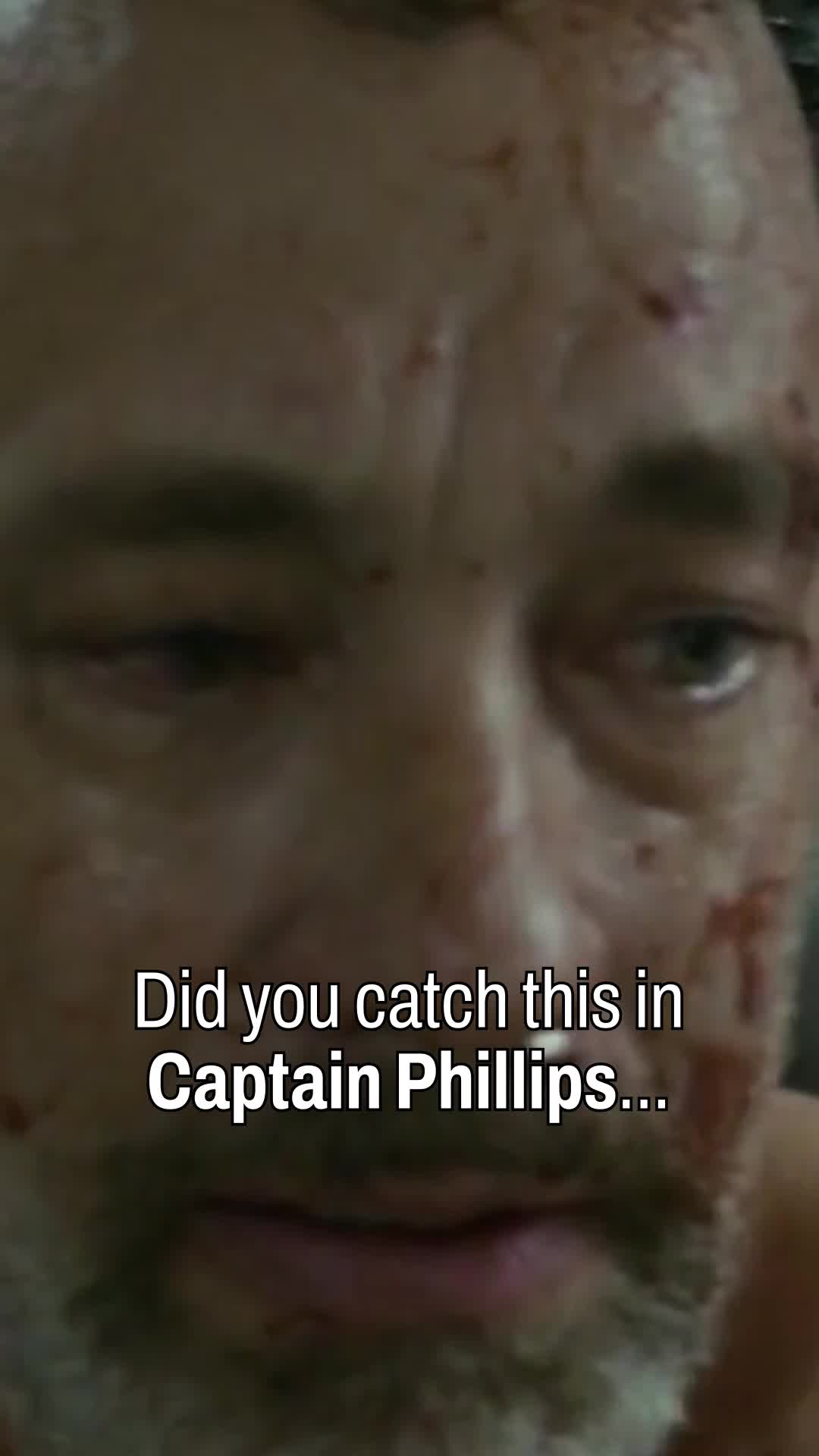
Yeah, I saw a clip recently, not sure why it came across my For You page on TikTok, but spoiler alert, they were showing how Tom Hanks when he gets rescued, it’s actual military medics in the scene, and they were directed to treat Hanks as if this were real.
 Tiktok failed to load.
Enable 3rd party cookies or use another browser
I remember his performance in that when he has that shock after being rescued, and he could finally kind of like let it go.
That’s the scene.
Yeah. It’s like, people don’t think acting is pretending. And it really is. This didn’t really happen to you.
Yeah, like he was in the trailer getting coffee 30 minutes before that.
1,000,000% So I was so blown away by his performance in that and I liked it. But yeah, there was a moment where you’re just waitng for the phone to ring etc., etc. But it was an exciting opportunity.
So how long were you in the Merchant Marines?
I did that for about five years. Yeah, I always say they were the years I would have gone to college. And instead I did this. I just enrolled in college, getting a business degree. I’m in my like, third week, so I’m like a freshman. I’m always joking with my wife, like, what’s it like to be married to a college man? That was funny to her two and a half times.
But you’re not just doing this for a bit to have a new TV pitch.
There was a part of me that thought it might be an interesting podcast, because you do have these all these new terms and concepts that are being introduced. I have an entrepreneurial spirit, but I don’t have any formal training. I was like, Oh, this would be maybe a podcast or some video. But it’s a lot of work. So I’m just focusing on the actual studying part and then maybe some art might come out of it later.
OK, so I think I reached out to you after you posted the photo of you from Malcolm in the Middle. Bryan Cranston, where you’re playing Jesus.
Yeah, that was really my first big break.
So I want to explore what happened in the period between leaving the merchant marines and that moment. What was that period of your life?
Once I decided not to ship out anymore, it was a very distinct choice I made. Because I knew I wanted to either move to Chicago or New York or Los Angeles and do comedy and act and write and do those things.
Where was that comedy bug coming from?
Is class clown too cliche? I was just always kind of the funny guy.
So it was in the back of your head when you decided join the Merchant Marines.
Yeah, I just didn’t have any inkling of how that came into your life. I didn’t have any experience at all. I’d never even acted in high school or college or any of those things. I’m not a Nepo Baby. I don’t have anyone in the business. I just knew at that time when I was shipping out, I was like, well, this is kind of where I want to be right now. And in those years, you get on a ship, and then you get off and then I would go backpacking and get on another ship and so that was kind of like my five years. The last job I did. I took a tanker from Long Beach to Boston. So we went through like the Panama Canal of the Gulf Coast, and up to Boston, it was like about a three-week trip. And it felt like nine years. I mean, I had never really thought about time in that way before, but I was just like, this is enough. I did want to do comedy, but I didn’t know how to get in. So after I stopped, got off my last ship. I moved to Los Angeles, one of my brothers and I got an apartment together. And I started doing production assistant work. I didn’t know a lot but I could show up on time and have a good attitude. And I can get someone’s lunch. I can empty that trash can. You know what I mean? When you’re literally the bottom rung.
That is the most people-pleasing job on set.
So I did that. And then I kind of transitioned into doing production sound. I was a boom operator for a lot of years, too.
Were you immediately growing your hair once you left the ship?
No. You can have your hair like that. It’s not a military job. That’s how I looked my entire career. Malcolm in the Middle? My hair? It was always like that, because I think there’s also something about being 20, like kind of a Greg Allman thing, beard and long hair. So there’s no grooming standards in the Merchant Marines.
So I had long hair, I had a beard. And then what I would wear is I remember I’d have coveralls that I cut the arms off and I cut the legs off and they were shorts and I would just put that on like over a T-shirt and just kind of worked.
So how long were you being a PA before you figured out what the next step was?
I had done PA work for about three years. And somebody hired me to do sound and so I was kind of like doing both of them at the same time. Then I was able to get enough sound work where I could say no to PA jobs. And then I joined the Union. So it was probably like four or five years of that before I was in IATSE which is International Alliance of Theatrical Stage Employees. It was 695. So I joined that but even then, entertainment has always been the gig economy. You know what I mean? You do a job and then the jobs over and then you like look for another job. It was before it was everywhere. It was LA.
So at what point, then, do you finally step on a stage somewhere to tell jokes?
First stand-up spot I ever did was Jan. 20, 2001, after I had been in Los Angeles for about three years. Because the first three years I did want to do it but I just needed to make money. And you know, just try and keep the wolves away. So I was working like all the time on that. The first time I did stand-up was at a place called the Theater of Note. They did this thing called the 24-hour performance marathon. And they went from noon to noon the next day. And they did set 24 hours of acts, book like 10 minutes at a time. So I didn’t have a lot of experience. I did have like my notebooks. But I reached out to the guy that was booking it and he’s just like great, yeah.
I got 24 hours to fill, sure you can have 10 minutes? What time slot did you get?
How bad could it be? But here’s the thing I was supposed to go on earlier. But then Tenacious D was the headliners of the of the thing and they did like, you know, everyone loved it, and we were glad, but they probably did like you know 45 minutes to an hour. So I went on somewhere after 3 a.m. So I followed this young man who is probably a teenager from Canada, who played electric guitar, and he was in town for some like gear convention. So I follow the electric guitar player. I did my spot. It went OK. For me the success was I did remember most of the things I wanted to say I don’t know how many people laughed. They were nice. It was a fun crowd. After me, we all went into the parking lot. And a guy juggled fire. And I was just like, these are my people!
And that young guitar turned out to be…
I don’t remember. I do have the flyer from that show. I’m not a pack rat. I collect things. I try and I have something from everything. So I do have the flyer from a show. I have call sheets.
You told me you’re writing a book. So it helps to be a packrat and a hoarder, because then you can actually find those golden memories.
Yeah, true. I’ve probably written about 12 stories right now. The book is called ‘Have I Seen You In Anything?’ Real-life Hollywood stories from a guy who seems familiar. Because that’s, you know, have I seen you in anything? Is the question I get all the time
when you’re a character actor.
Have I seen you? I’m like, I don’t know. Maybe? What shows do you watch? But I’ve been lucky enough. I’ve been on a lot of things with a lot of different people. My joke is like, I’ve sailed around the world, and I’ve met everyone from President Obama to Papa John. So the stories
Those are the two extremes.
So I just finished writing about working an event at the White House and meeting Obama there and shaking his hand in the Blue Room. But the whole idea is it’s not a tell-all it’s a tell some. As opposed to dishing and making everyone come off like they’re terrible people. I want to do the opposite, and make everyone come off like the great people that I experienced. So it’s not trying to build them down.
Right because like you posted a teaser recently about getting to work alongside Bryan Cranston, you say he’s still like the best acting experience you’ve had.
The best actor
And you just told me a few minutes ago that this was your first big break. So your first big break was a character acting role, not as a stand-up comedian.
Right. That was in 2002. I made my network television a year after that. And I think it was because I just had like the long hair and the beard. And so you know, I had been going out for things but they’re like, yeah, you’re your heroin dealer number six. OK. I didn’t really connect with those parts. I was thinking about cutting my hair. And then this one came up and it was just like the confluence of opportunity and preparation, luck, and I just wrote down the lines on a legal pad, was trying to do my best to just remember and keep up, and he was just blowing the roof off it with his performance. It was really remarkable.
So did that experience both performing it but then also getting to see it on television: Did that experience change your life immediately? Or was it more of a gradual?
It was more of a gradual thing? I wasn’t able to work enough to only act. You know, I still had to do a boom work. At that point, I had transitioned out of doing production assistant work, but I was still acting and booming and I was doing that for another four years, almost five years, and then I got my first series regular role in 2006 on a show called Reanimated on Cartoon Network. And after that point, I had, you know, come hell or high water, you just kind of have to try and transition. Do the best you can, in a certain direction. You can’t do both.
How did you decide back then, not just how to balance that but then also how to balance your stand-up aspirations? Because the knock on LA comedy versus New York: New York comedy, the comedians all want to be comedians, but LA comedy, comedians all want to be something else.
They all want to be TV writers, right, or TV stars or movie stars. I do think, anyone, if they want to be a stand up, they should go to New York because there was a time when I first started in like 2001 where I went to sublet a place out there because I wanted to do more spots here but I just couldn’t. Also, even if you can do two spots in one night, it’s just like, well I got this one in Marina Del Rey and the other one’s in Pasadena, there’s no subway, there’s no you know, so I went out and went to New York and I was doing two-three spots a night for a while, but it’s been a balancing act. More than I would have expected. Because if it came down to stand-up or acting, I would always lean on the side of acting. Because I think in my experience at the end of the day, it gets seen by more people. You get health care, pension, if you’re a union member, and I think they definitely kind of feed on each other. But it’s, I was just never a 48-week a year guy. You know, I don’t know if that’ll ever be a part of my life. Right now. I’ll still go out six, seven times a year. I’m putting a tour together now for like the west coast of Canada, the Pacific Northwest. But I try to stay local at the end of the day.
And for the listeners who can’t see because I’m not shooting video. We’re staring at his office, the bulletin board behind his desk, and it’s like The Usual Suspects, where I keep pulling questions and you don’t know where they’re coming from. They’re all coming from the board. So you have like a stack of checks. Are those like two-cent residual checks?
Yes. I have never cashed a check that was less than $1.
OK, so those must be your Conan and Craig Ferguson checks?
Exactly.
Neither of those shows are repeating anymore, so you’re not getting.
No, I don’t think I’ve gotten any money from them for a long, long time. But like, there’s some that just come in and just like it is Malcolm in the Middle and it is like 80 cents or — my favorite memory recently, you know, I just got hip surgery, and I got, you know, explanation of benefits from my insurance company, which this isn’t the number that I had to pay. But my surgery was $196,000. I got two pieces of mail that day and that was all I got was the letter with $196k bill and a residual check for 37 cents from Crazy Ex Girlfriend. That was just like (chef’s kiss) this is perfect.
For the Crazy Ex Girlfriend episode, did you sing?
I did not sing. I did not sing. I was a business developer. We were engaging her legal services to try and we had like a land dispute. So they were going to bring us back for another episode. But you know, Rachel Bloom is amazing. She’s a wonderful, wonderful person. She is super duper talented.
I just had a flash in my mind you were talking about like going through extremes and like you yourself have gone from looking like either Jesus or a heroin dealer to classic evil White guy who is gonna come and take you’re taking for all your money.
Oh yeah, those are the ones you have to look out for, the ones that are just doing it with a smile now. But I always say I have yet to hit it big but I’ve hit it medium for a long time. And hitting medium is pretty sweet too.
I mentioned Dry Bar comedy. How did you get involved with those people? They’re in Utah?
Yeah, they shoot all the specials in Provo. A friend of mine, Patrick Keane, who’s a great comic. Great dude. He said that he had done one in season one, and that they were just like looking for people to do a season two and I put them in touch…and I sent him a transcript. And he’s great. He said they could also do these parameters where like, they could add the parental controls on people’s specials. And they’re like, hey, there’s mentions of this and this, and I intentionally tried to make it as like clean and impugnable as possible.
How many did you do?
I did two shows. And both of them were put together for for one special.
They’re relatively recent. I say that somebody who has been around for too long. To me, it’s relatively recent, like since 2010, they just came on the scene and started pumping out these video specials that I guess they sold them, or did they sell them or you had to have a subscription to see them on Dry Bar. Then eventually they started putting out clips or full specials out on both Facebook and YouTube. I saw friends of mine like you who were seeing like millions of views for their clips on either Facebook and/or YouTube.
Yeah, I definitely did it before that element of it happened, but I’ve been the beneficiary of their marketing, for sure. For sure. And a lot of people have gone on to even bigger numbers, like I believe Leanne Morgan had a Dry Bar and she’s got a theater tour now, so a lot of things are are happening from Dry Bar that I hear are pleasant. Also, they take care of the comics. They have like a profit-sharing deal.
What’s the contractual arrangement generally?
So what they do is they’ll record your special and they’ll recoup their investment in the special and then afterwards, they pay you a royalty on every, you know, YouTube Facebook subscription. There’s also a chance where people can give you tips. They’re like, Hey, I liked it, and they can give you like a direct payment.
What happens when somebody does that? Do you get like a ding on your phone? Or does it show up in your email?
No. They do quarterly reports. You get a quarterly report from Dry Bar.
So you’re not watching TV with your wife and then suddenly, you hear a ding, and you can say, ‘Somebody liked the special, honey!’
No. Maybe that might be something they do in the future, but for the time being, they just do it every they just do it every quarter. and they’re good people. I think they have a solid business plan and ethics, which is an incredible combination. And when you have the building blocks for that, the sky’s the limit.
But in terms of what you’ve seen out of it, have you seen like, is it been like these residual checks or is it more substantial?
No, it’s, it’s been
I don’t know how frankly you want to talk about it.
It’s been a stream of income, but it’s, I think to make it in the entertainment industry, you can’t just have one thing. If you can have that with touring with TV, with commercials, with royalties from you know, like your Sirius XM — all these things kind of put together make your
What do you consider the main stream?
Acting? Yeah. So far, it’s been acting, but every year is different. I’ve had years where I was just like, I couldn’t believe it, you know, and then there’s other years where it’s just like, I have to get how much by June 30 or I lose my insurance? You know, it’s feast or famine.
I have seen a couple of comedians or actors, even post on Twitter saying, Hey, I have two weeks left. I need a gig. Give me something to prove that I stay in SAG or the WGA.
True. It’s not for the faint of heart. There’s not a lot of security or promise to anyone, and even people who are big-time things if you’re like, a famous director, but you don’t do a movie for two years. You know, they’re like, well, guess what? You know, you’re out.
Coming back to the book, what made you decide this is the time to write these stories?
Well, I’ve lived in Los Angeles for literally half my life. And in that time, I had, you know, these experiences and they would come up if you’re hanging out at a party or dinner with people. But I’m a little more reserved and to hold court and be like guys, did I ever tell you about Fred Savage? Everyone gather around! I’m not that guy. But I know Fred and I’ve worked with him, and he’s wonderful. So if I can, like write down a three to four page story of just like, hey, you know what, do you guys like Fred Savage. I want you to like him even more after you hear this. So my pitch is I want to throw people over the bus. Positive, uplifting, true of them being themselves and I mean, I just finished a story with Edward James Olmos. And he was just really remarkable acting. And especially when you consider like, he would come on set and like he would always be on the phone. He’s always with like, civic leaders or you know, all these people would be talking to him all the time. And then like, OK, we’re rolling. I gotta go. I’ll call you back, hide his phone in the drawer on set and then just like, just deliver the most moving performance. That is incredible. He is a master at his craft. And then they’re like cut. And he’d be like, Sorry, had to go. You know, it just you see people like that and you know, they’re operating on a on a completely different level that might be attainable to you as an actor. But he’s great. He’s really, really great.
So the book is really showing how you’ve grown from a Joy Boy to a Joy Man.
Exactly (laughing)
Bill Lawrence whispered in your ear at the very start of Shrinking. Has he whispered any sweet nothings about whether you get to stick around for more?
I don’t know. I don’t know when this is going to air. I do know I did two more episodes after the first one. I don’t know if they had planned to have me back or they had already kind of like written it up. But episode nine I think is a big Steven episode. And they only did 10. So to do three out of 10 was, you know, for me, even having that day and showing up. They handed me a call sheet that has my name on it and Harrison Ford’s name on it. And I was just like, I’ve said this many times but like, you know when you look at your biography that, whatever your CV is or your resume if it was handed to you when you first arrived, or first started your career or your job. I wouldn’t have believed it. If they’re like, hey, you’re gonna be in a project with Harrison Ford. C’mon. As you’re doing PA work. But Bill was very nice. The first day I got on set, he, I don’t know why. But he follows me on Twitter. And we’ve had some interactions and you know, so I showed up on set and he’s like, ‘Hey, Matt Knudsen’s here. We all know Matt from things, right!?’ Which is very
That’s the blurb on the back of the book.
We know him from things! But it was a lot. But it was a very nice way to say like, Hey, welcome. Make this guy feel welcome. He’s with us, which is great. And Jason Segel, the very second I walked on set he was like, so glad you guys can make it. But to be very honest, that was just one audition out of out of hundreds that you know, maybe you don’t hear anything. I shot it on my phone. I sent it in, you know. I know. James Ponsoldt, the director, we have a mutual friend in common. We’ve gone to some some Dodgers games and stuff. He’s a really great guy, but it’s just a lucky break. It was just a lucky break.
Everything goes your way!
Yeah. That’s a different character! He doesn’t really feel that way, if you saw the most recent episode.
Well, Matt Knudsen. Thank you so much for allowing me into your home.
My pleasure.
Whether this gig stays or goes. I know this chat right here. It felt very therapeutic for me.
Glad to hear it.
I think this was a good session.
I have like very dulcet tones that are soothing.
I feel soothed.
Everyone just relax, it’s going to be fine.
Thank you so much.
You’re welcome. Thanks, Sean.
 From The Comic's Comic
Leave a comment