
Episode #422

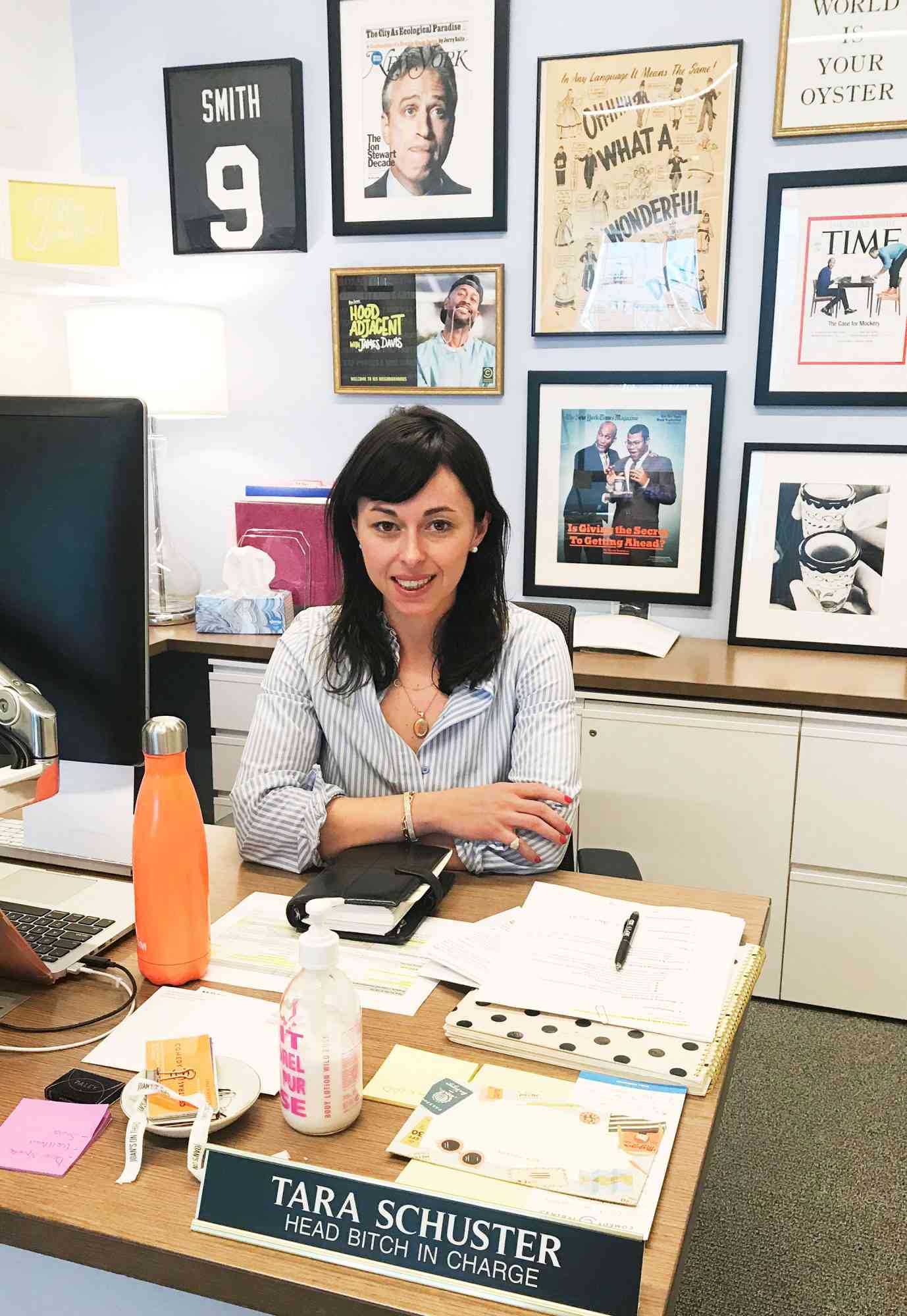
Tara Schuster was a 25-year-old working at Comedy Central who’d worked her way up from interning at The Daily Show with Jon Stewart to curating Jokes dot com when she hit an emotional rock bottom. She then began learning how to reparent herself, which she turned into her first book, “Buy Yourself the F*cking Lilies.” She did that while rising to become a vice president of talent and development at Comedy Central, working on the Emmy and Peabody Award-winning Key & Peele, Emmy-winning @midnight, Another Period, Detroiters, Hood Adjacent, and Lights Out with David Spade. When the pandemic hit and Comedy Central imploded, taking Schuster’s job with it, she found she needed to do more work healing herself — that’s the focus of her second book, “Glow in the F*cking Dark.” Schuster sat down with me to talk about her transition from comedy executive to self-care expert, and about how the work of healing is never truly finished.
Want to discover other cool Substacks? Each morning, The Sample sends you one article from a random blog or newsletter that matches up with your interests. When you get one you like, you can subscribe to the writer with one click. Sign up here.
If you’re not already subscribed to my podcast, please seek it out and subscribe to Last Things First on the podcast platform of your choice! Among them: Apple Podcasts; Spotify; Stitcher; Amazon Music/Audible; iHeartRadio; Player.FM; and my original hosting platform, Libsyn.
This transcript has been edited and condensed only slightly for your convenience.
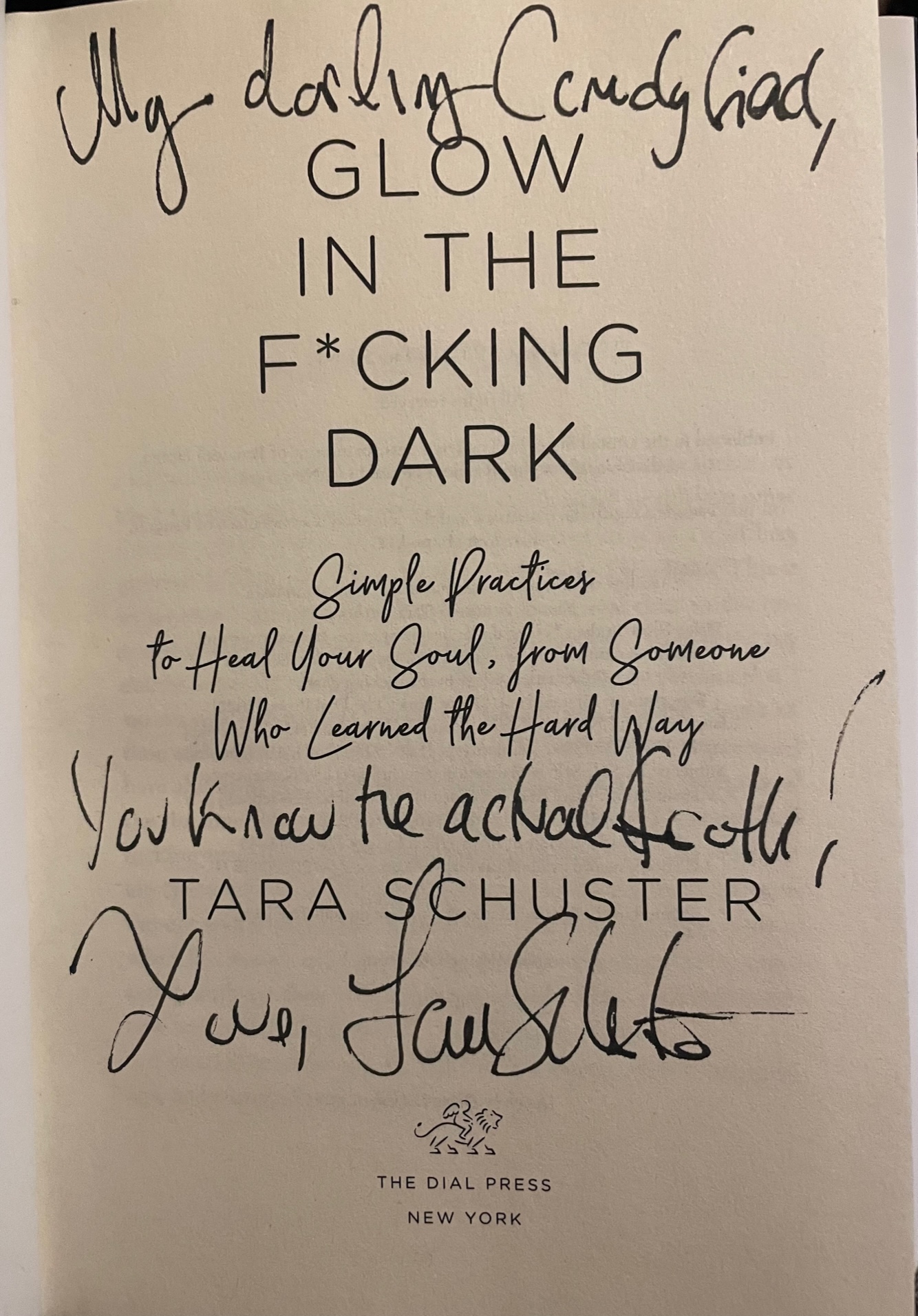
Tara Schuster, last things first: Congratulations on your second book! You wrote in the inscription of my copy, “You know the actual truth.”
Hahahahaha. So I talk a lot about comedy, or not a lot, but obviously that’s where my career started. But I’m usually talking to audiences who don’t know anything about TV or comedy in particular. So yeah, you know where the bodies are buried. You know the truth.
I do, and you mentioned “soc med,” social media, a little bit in the book. And as it happens, (the day we spoke), Facebook was kind enough to remind me in Facebook Memories, on this day in 2018, I was moderating a panel for Comedy Central at South by Southwest, with Kent Alterman and Jonathan Mayers to talk about the first Clusterfest. Which I thought was kind of bizarre at the time. Not that Comedy Central would ask me to moderate this, but that we were talking at SXSW about a competing festival.
Yeah, wow, that brings back memories.
But then I thought, well, when did I meet Tara Schuster first? And it turns out I met you at Just For Laughs in Montreal in July of 2015. I’d like to thank Bart Coleman for making that happen.
Oh, Bart. Yeah. Wonderful. I love Bart.
That was the time of at midnight, and definitely the time of Key and Peele. I was crunching the numbers. And if I’m doing this right, you were four years removed from the brink, your emotional rock bottom that you talk about at age 25. So you were starting to learn to reparent yourself. But at the same time, summer 2015, that was also when you were going through the Emmy un-nomination saga (you write about in the book)?
Maybe! There’s a huge disclaimer at the front of the book. The very first thing I say is I am not good with numbers, math, years. Nobody wants me to do the check at a restaurant, so I basically I’m just like, I don’t know? This all happened. I don’t know exactly when and I guess if I looked at Instagram, I’d be able to figure it out. But who has time for these details?
I did have to go back through my iPhone camera roll to piece it together myself. That was the year Van and Mike received a digital Emmy nomination, so I figured that was it. Not to put you on the spot.
But what was your life like when I met you back in 2015?
Good question. So I was at Comedy Central working on developing shows. And I had not pitched the book yet, because I believe I pitched the book in 2016 to Random House. So I was in this position where, Comedy Central was my home. My first job ever was being an intern at The Daily Show with Jon Stewart, which was amazing. And those connections led me to get my first job at Comedy Central. I was a PA for a website called Jokes dot com. So all my friends were like ‘We work at McKinsey. We work at Goldman Sachs.’ I was like, I work at Jokes dot com. I remember I was once at a party where someone literally turned away from me when I said that, like ‘cool bye.’ And so at that point, I was definitely exploring like what a development job in Hollywood would be like, and I loved it. I loved getting to go to things like Just For Laughs or get to meet these like epic, amazing comedians and learn from them. And also amazing executives, like Kent Alterman. He is one of the smartest, most artist-friendly — I don’t know anybody who doesn’t like Kent. Like if you don’t like Kent, then that kind of reflects on you. Not Kent. So at that time, really purely, comedy is what I’m doing.
So for those people who don’t remember, can we just spend one or two more minutes on jokes.com?
Oh, please! Deep cut. Deep cut!
That was separate from Atom?
Yes. So, Jokes.com was Comedy Central’s stand-up portal. It later became I think like I think we changed the name to like Comedy Central Stand-Up, or something. So there’s basically like — if the Jeff Dunham special had just come out. And you would on the homepage, you’d get a joke from him and then a little clip. But also, it was a cool time of like Maria Bamford was just getting getting big. Kumail Nanjiani was on John Oliver’s NY Stand-Up show. It was a very lucky time for me to watch a ton of stand-up because that’s all I did was watch stand-up videos, then clip them. Like, how you watch a video on the internet? That was my job was to do like the back end. It was very lowly, lowly, lowly, lowly job. And I’m not good with like computers. So also very difficult for me.
Was there a time in the development of jokes.com where it actually strived to be or Comedy Central hoped that it would be a database for all the jokes?
Yes, that’s what the whole thing was, for sure.
So it was your job to then like, go through like a Dave Attell special and go OK, this is a joke about this. So it goes here.
Yeah. And then at one point, I was curating the homepage. So I was picking out like, what the Joke of the Day was and what the Clip of the Day was, and building stand-up profiles. I mean, I wonder if it still exists? But I was there for, like three years at a minimum at jokes.com.
NOTE: Jokes.com redirects now to https://www.youtube.com/standup, which is the Comedy Central Stand-Up channel on YouTube.
So when we met, you said you were still a year away from pitching “Buy The F*cking Lilies.” So before that, were you thinking that oh, this is going to be the rest of my life? Not necessarily Comedy Central, but definitely being a producer or talent developer?
Well, I went to Brown for playwriting, and I thought I was gonna be a playwright, actually. Until I moved to New York, after graduating, I had a job at the Public Theater. I was like all in. Work for all these small theatre companies in New York. And then just very quickly realized, Oh, this is a really hard living. Like, nobody here has health insurance. Plays make $0 I have to pay my loans. Like, I don’t know how this is going to possibly work? And a friend of mine who’s also in the theatre community had just interned at The Daily Show. So he recommended me to The Daily Show. He was like, it’s a lot like theater. You know, TV shows are a lot like theater. So I had never thought that I was going to be in TV development. Like I had never thought that I was going to be a producer. I thought I was going to be a creator. And then when I got to Comedy Central, I just really liked it. I liked the people. I got such incredible access. I was learning so much that I stayed, but I kept doing shows in like the Fringe Festival, or you know, I submitted my Shouts to The New Yorker. I just never gave up right? Comedy Central was for sure my number one job, my number one priority. And I kept writing.
Right, I’ve heard you talk before about how at a certain point Comedy Central felt like family. Like your hyphenated last name is Tara Schuster-ComedyCentral. Yeah, that a shrewd taste for humor. Key & Peele, Another Period, Detroiters, Hood Adjacent. Working on great shows.
Thank you! Yeah. I thought so.
But it also means that the last few years you were at Comedy Central, you were balancing that with writing the first book. How did you balance that in your head?
It was very interesting, because the only time I could write was before work, because first off, I can only write in the morning. Unless I’m really in a crunch time. So I just got up early and wrote before work and that was really nice, because it was like two different parts of my brain working. So I’d wake up early and right then I go work out and then I click in — that was like my change gear shift, and then go to the office, but they were very separate in my brain, because it was too difficult. Like, I could imagine a world in which I tried to write a little on the side at work or something. And that just was not in the cards. It’s like way too demanding to do both of those things. simultaneously. So everyday it was like, changing gears, you know, like very consciously.
Because one hour you’re talking with Tim Robinson and Sam Richardson. And then the next you’re like, OK, self care, self care.
And it’s the difference between being a producer and a creator. And knowing the boundaries. So take a show like Detroiters — knowing the boundaries of when I’m giving helpful notes as someone from the network. And, you know, being my own artist, like I don’t want to unduly give notes from like my taste and how I write and stuff. I want to strengthen and bolster the voice of the comedian. And do the best I can on behalf of the network. So there were two very, very different things that I had to keep, like, very separate for my own sanity.
And of course, when the first book comes out, it comes out February of 2020. Which turns out to be a momentous year for everybody, but for you, it’s such a roller coaster ride because already basking in the glow, so to speak, of this first book and all the promotion that goes with it. And doing. And then hard on the heels of that comes the pandemic, and then Comedy Central implodes.
Yeah, it was very difficult for me when Comedy Central imploded because I had been there basically a third of my life. And it was my status symbol identity marker that filled in for having like a pretty shitty childhood, which is basically what “Buy Yourself The F*cking Lilies” is all about is, you know, how do you reparent yourself? If you didn’t really have parents who were there for you, how do you become your own parent? Because I was very unstable and knew that I just needed to do that basic caretaking. But how? It’s not like an easy endeavor and there is no book for that. Hopefully, mine is now a book for that. Comedy Central pretty quickly, they had just merged with Viacom CBS, so there was a lot up in the air. I think they were eventually going to lay everyone off in Comedy Central development anyway, because just where it is now.
It’s a shell of itself. And now they’re Paramount Global. And all of the individual cable channels are kind of shells of themselves. They’re talking right now about selling off BET.
The only good thing was that “Lilies” had just come out and was successful out the gate. And so I had something else to focus on. But it took me like two years to become comfortable with the idea that I would be a full-time writer, because I was so used to having someone else define me, having a job, a role, you know, the writer thing is so amorphous and then you don’t have a boss and you’re doing it all yourself. So it was a hard multi-year adjustment. And I didn’t always see it as a blessing. Like, I wasn’t happy to be laid off. I wasn’t thrilled to be moving into this new position. Because it wasn’t on my own accord, it wasn’t my choice. And it took it took like two years for me to get OK with OK, now I’m gonna be kind of an entrepreneur and starting my own business around my writing. And now obviously, I’m very glad. This is my dream. But two years ago, I was like, Should I try to get another job? Should I try to be in development somewhere else? It was way more difficult.
It’s funny to me, from the outside lacking the perspective to be like, you weren’t able to flip that switch immediately and go, Oh, no, I’m gonna be a best-selling author and Comedy Central will be my side hustle, but I’m really an author now.
No, not at all. And like, I think it was, they would not have been pleased. If you know, I was 100% allowed to write “Lilies.” It was carved out of my deal. Everybody knew it was happening. It was completely aboveboard, but there would have come a moment where I had to choose, because now two books in, it’s impossible. You cannot have another full-time job. I could for “Lilies.” I could get away with it because it was all I could do. But I had no choice. But in retrospect, I was stressed out all of the time. Because I was doing two full-time jobs. I don’t recommend it. Except I think also having the time pressure was helpful getting that book out the door.
You also weren’t necessarily thinking of a second book.
No. But I would say I’d always wanted to be a writer. I went to school for playwriting. I always wanted to be a writer. I was too scared. I always wanted to be a TV writer. I was just terrified to like jump in. I thought it’d be too hard. I’d be poor and nothing would work. You know, really took until “Lilies” being successful that I was at all comfortable with the idea of writing.
The fact that you’re willing to be open about being vulnerable, right? To put pen to paper and say that, even though you had written this book about self-care, and even though you were going all these conferences telling other women and other people that they deserved self worth. You were still internally struggling.
Yeah, yeah. I mean, I think it’s at first I was like, ugh. So “Buy Yourself The F*cking Lilies” is how do you gain ritual stability? How do you reparent yourself? And I was like in an emotional slingshot. I was miserable. Mostly what I heard in my mind, it was a diss track of ‘You’re unlovable. Nobody cares about you, you’re ugly, you’re never gonna find love, you know, you’re never gonna be successful.’ Like I started telling myself I’d never be successful at 25 I was convinced at 25 that nothing was going to work out. And that turned out like I did the work of “Lilies.” I reparented myself and it turned out that I could change my mental health and I could really help myself. And then I got laid off and I was like, Oh, wow, there’s so much work here left to be done. The job had been a magic trick. Like “Look over here! I’m working on Key & Peele and hanging out David Spade! Look over here. I’m so fancy!” But don’t look over here at 25 years of complex trauma that I was not healthy enough to deal with. I think that was the biggest thing is like, I wasn’t stable enough to deal with my bedrock wounds. So I started doing that work at the top of the pandemic, because I had no choice. It all came to deal with me, you know, so I had to deal with it. But I had never thought. Healing is just not linear. Your mental health is also not linear. So while I was questioning, you know, should I really come out with another book that says, oh, shoot, I had more work to do? But then I just realized this is just way more honest. This isn’t just a line up of progression. You step back, you fall down. And I would be very surprised if I wrote another book like — “Lilies” and “Glow” to me feel like a progression. Even when I’m stepping back. I don’t think there’s a third book like that in me, or if there were, it would have to, like 10 years from now. I just, you know, you know what I mean?
Right. I’m laughing because, you know, in entertainment, it’s so cliche that that you also have a trilogy. It has to be a trilogy. So it’s comforting to hear you say, No.
I want to write a third book, and I have some ideas, but for my own sanity, I don’t want to have this much trauma to heal. And it’s not easy to sit in the worst moments of your life and describe them in narrative detail. Both books were really hard. So I don’t want to do that. I’d like some years off of, you know, and then it doesn’t end there. Then I’m like speaking about these things, basically, forever. But the good thing there is, you’re always reworking out things. Like the whole thing is, none of this work is ever done. Any kind of journey, any kind of healing journey is just a many year, up and down affair. And the big difference now is the floor beneath me is so much higher, like I’m so much more resilient about basically everything that things just don’t get to me the way they used to. So there is a progression in that sense. The more work you do, the better you’re doing it the better you are at recognizing it, the better you are getting back on the horse because lord knows I’ve fallen off many times.
Yeah, you’re right, though, that there’s no graduation ceremony for healing. It’s like OK, you’re healed! No need to worry about any of this ever again for the rest of your life because life still continues to happen. And because we’re just a part of it. As you like to point out: We’re all stars and that’s part of the “Glow” is that we’re all stars. Although as a journalist, I like to flip that around and go, “Stars — They really are just like us!”
They are! I agree with that. True statement.
Because of that we’re just one star in the galaxy. So we don’t have control over the chaos that happens. And sometimes that chaos can be frustrating and new and you’re like how am I in this situation again? Which is why there’s a concept that you mention — not imposter syndrome, although impostor syndrome is also something I’ve talked with many comedians about — is the good enough plateau. Which I hadn’t heard it expressed that way before, but I’ve definitely talked and written about the idea that sometimes it’s easy to know that you’re in a rut. Other times you have no idea, because you’ve just become so comfortable in the way things are that you don’t realize, oh, I’m in a rut, and I’ve just decided to settle for this because it’s less painful than growth.
I think we’re mostly not great at noticing where we are, whether we’re sad. A big thing in “Glow in the F*cking Dark” is even understanding what you’re feeling in any given moment is not just something we all inherently do. The very beginning of the book, I made an emotion wheel so that you can see that your emotions other than good, bad, sad, tired, stressed, which is what my whole existence had been boiled down to, you know, the miracle of life and I was just tired. Saying I’m busy all the time. So I don’t think we’re very particularly good at recognizing the good times, the neutral times, the bad times, like there’s not a lot of self-awareness, at least or wasn’t for me, in my everyday life. And what I really hadn’t seen was I thought that after I did all the work of “Lilies,” I would have quote unquote, done all the work like I thought that was gonna be my graduation ceremony. Never have to deal with these things again. I had mostly dealt with them. But no, you really have never completely dealt with anything. But again, your relationship to it can change dramatically. Yeah, there’s unfortunately no graduation ceremony and yet you’re always graduating. If you keep doing it, you’re constantly — I was talking to my therapist. My reaction to something that negative like a couple weeks ago, was 180% different reaction that I would have had two years ago. Now I have so much more emotional regulation, because the world is so chaotic. The big thing I’ve learned is you have to build internal safety. There’s no alternative. The world is crazy, will always be crazy. It is always changing. There is no calm. There’s no permanence of any sort. So your only alternative is to find a place within you that is safe, that is not constantly changing, that is reliable. And once you can do that. I can handle change, disappointment issues, so much better than I ever could before.
Also, as you pointed out, you going on this journey of self-care has also helped awaken something in your father to do the same, right?
Yeah, so the end of “Lilies.” My dad and I, after you know, having a neglectful childhood had been reunited after I helped him. He almost died and he had two brain surgeries and I had to navigate all the medical things, because my mom’s not in the picture. There were no other adults to help. Very dramatic moment in my life. And so “Lilies” ends with, OK, my dad’s alive. Hooray! Then immediately after COVID hits, and I had parented him for so much of my life. And I just couldn’t do it anymore. I was just so sick of it, so tired and so at the beginning of COVID, I stopped talking to him actually, like all these families are like coming together and I was like, nope, I’m not gonna talk to my dad. I don’t talk to my mom. My sister lives somewhere else. All I’m gonna do is focus on trauma therapy, in retrospect, like why did I choose the most isolated time in history to do this very hard thing in isolation? But that’s what I did. And I wasn’t talking to him and then COVID hit. Of course, my dad’s 78. So as soon as COVID hit I was like, I’m here for you. Whatever, put this on hold. Peace Treaty. I’m here for you. And what I found out was that he had been in therapy for the preceding two years to answer the question, Why is my daughter not talking to me? And he was a completely different person. He would tell me he was proud of me. He would thank me for things. He wouldn’t negative about every idea I’ve ever had. He was, for the first time ever, a real father to me. And I include that in the book not to say that if you draw boundaries, someone else will change. That is not what I’m trying to say at all. In fact, I find that you can’t make anybody change, right? You can draw whatever boundary you want, that’s for you. But you can’t make somebody change. The reason I include it in the book and the reason I find it so helpful is just that anyone can change. From any age. You know, we say things like you can’t teach an old dog new tricks and that’s just lazy. Truly, like, that’s just not the way it is. And it’s not like you know, I also keep in mind that my experience is not everybody’s experience. My life is not so universal that you can plug in anybody, and my dad was — I don’t even want to say like exactly what he was, but he was a very different person. And once he wanted to change he did it. And I hope that gives a lot of people hope. Especially if you read about my dad that that person who treated me the way they treated me for so long was able to completely turn it around to the point where we have a great relationship now. A real one.
It’s great and it’s heartwarming and comforting to know that it’s possible.
Because I think people get hopeless about their parents, their friends, their marriage, themselves. It doesn’t have to be that way. It really does not.
I mean, you started out at The Daily Show being such a people-pleaser that you put all of your heart and energy into a coffee machine. And now you’re this person who’s not just about self care for yourself, but promoting that for other people.
Yeah, yeah, thank god I cleaned that coffee machine, though, because that got me my first job at Comedy Central. But, you know, for me. I never thought it would be this kind of author, necessarily. But George Saunders, the writer, I’m gonna butcher his quote, but he says something like none of us are the writer we want to be. We all have this like shitty little hill, but it’s ours. You know? Like it’s ours and the truer we can be to whatever is ours, the better. So I always think of that. This isn’t what I saw happening for me, and it is where I obviously needed to go and have ended up.
Have you looked at comedy differently?
Particularly from having been an executive where you’re giving notes. There’s like, 5,000 notes I would ever give now, that I now recognize as completely unhelpful. Just the way I talk to artists is a lot different, because you don’t get it. I’m sorry an executive doesn’t get it unless they’ve written something and had it torn apart by somebody else. It’s just impossible like no shade. Also maybe that’s good in some ways, really no shade. I was that person. It’s really vulnerable to be writing these things. And the artist is always the most vulnerable person on the whole ladder. They’re usually paid the least. The writers are treated the worst. But they make the thing. The whole thing they make. Yes, there are executives helping. Yes you know has to be executed, yes to all these things, but the idea the concept, the words, what, what brings it to life that anyone would care to watch it? That’s the writer. And now in my experience, I even see stupid things — like when a writer is paid, like when business affairs actually cuts the check for after the deal closes. If you’re a writer, that’s horrible. Like I never thought about it from that point of view, that we weren’t paying the writers timely enough. Maybe timely enough for Viacom, for a big company that’s just like, oh, we pay vendors. It’s no big deal. But nobody’s ever thinking about the life of that one individual. So my whole perspective is completely changed. And I guess it’s not comedy-exclusive. It’s just entertainment has completely changed.
So we could see you on the picket lines with the when the guild goes on strike.
Yeah, probably at this point. Yeah, for sure.
There was this old notion of comedians using the stage as therapy? And more recently, I’ve seen more and more comedians, instead be onstage talking about being in therapy, which is a completely different concept and I wonder what you think of that notion?
Right before my book is gonna come out, somebody in comedy said you don’t want your book to be public therapy. Like, you don’t want to share too much. And I remember just flagging that in my head as something weird. Why would storytelling be called public therapy? And I think there was just a lot more of a stigma even three years ago about talking about anxiety, depression, even within comedy. I also really dislike the idea that all comedians must be a little like crazy or dark to be a comedian. I think that’s so messed up. So limiting. I also reject the idea of the starving struggling artist who has to have a problem or an addiction in order to be deep. I really don’t like those things. And you know, in entertainment, many people are struggling with mental health issues, just as in any industry. What I’m seeing. I’m thinking of like Taylor Tomlinson, who, she’s just open. You’re not hearing her work out her problem. She’s making jokes about them, jokes about that experience.
Yeah, she’s not trauma dumping.
Oh, yeah. Which I’ve never seen. I can’t think of a comedy I’ve seen recently where they’re just like dumping. I do know friends who do that. But not a polished comedy set have I seen that’s just like, let me throw your my woe at you. As opposed to I have a take on this. It’s the famous Nora Ephron quote, “Everything is copy.” I see it as just in that vein, like once you’ve got any perspective on your own mental health, it’s just your copy like your content. You can do whatever you want with it.
Tara Schuster, I’m in awe of you and your copy. So I feel privileged and grateful that I’ve been able to watch you on your glow up.
Oh, thank you, Sean. That’s so kind, and it’s funny to have known you all these years in different capacities. It’s kind of crazy. So thank you so much for having me.
 From The Comic's Comic
Leave a comment