
Episode #424
If you received my most recent dispatch From The Comic’s Comic and clicked on what comedy show I’ve been plugging in The New York Times, it’s already updated from last weekend to this weekend, which also coincidentally features this week’s podcast guest!
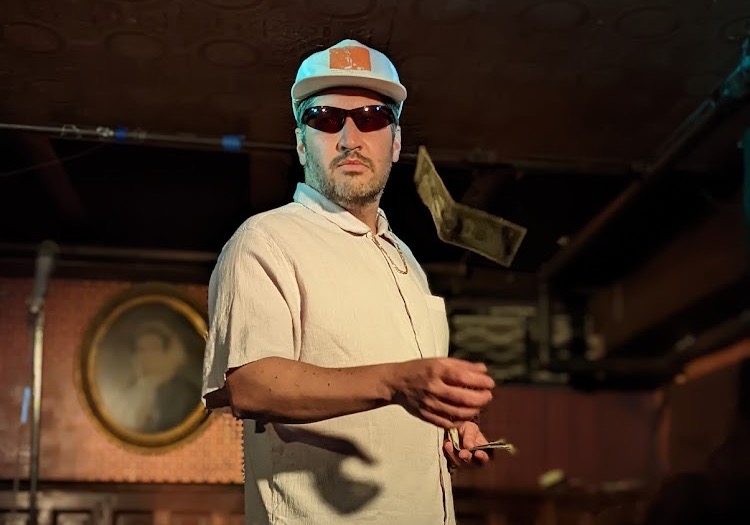
Carmen Christopher wrote for and performed on The Chris Gethard Show, eventually hosting the first episode of “Chris Gethard Presents” on Manhattan Neighborhood Network. Christopher’s other early credits included appearances on The Special Without Brett Davis, At Home with Amy Sedaris, High Maintenance, Alternatino with Arturo Castro, Shrill, Joe Pera Talks with You, and Search Party. He currently is a writer and performer on Craig Robinson’s Killing It, is a recurring character on FX’s The Bear, and a writer on Nathan Fielder’s upcoming Showtime series, The Curse. And in 2021, his Street Special performed on the streets and sidewalks of New York City became the first original comedy special for Peacock. Christopher talked to me about his early years learning comedy in his native Chicago, auditioning for Saturday Night Live, and the differences between performing in New York and Los Angeles.
Enjoy the trailer for Peacock’s Carmen Christopher: Street Special!
Want to discover other cool Substacks? Each morning, The Sample sends you one article from a random blog or newsletter that matches up with your interests. When you get one you like, you can subscribe to the writer with one click. Sign up here.
If you’re not already subscribed to my podcast, please seek it out and subscribe to Last Things First on the podcast platform of your choice! Among them: Apple Podcasts; Spotify; Stitcher; Amazon Music/Audible; iHeartRadio; Player.FM; and my original hosting platform, Libsyn.
This transcript has been edited and condensed only slightly for your convenience.
The first time I remember seeing you was in the summer of 2016. And the very first time I saw you, you were auditioning for Saturday Night Live.
Yeah, that was a while ago. Shit! Yeah, I remember that. That was a good show, actually. I remember leaving and feeling good about that. I mean, I didn’t get hired but I felt good about it.
It was the first and only time that I’ve ever been invited or allowed to see one of those. Let me clarify — it wasn’t at 30 Rock; it was at The PIT.
Yeah, it was like an audition to get to 30 Rock to do the screen test. So they set up a ton of those showcases to see who they want to invite to screen test, and I got invited to that. I was asked to submit a tape list, and I guess if they like your tape, they ask you to showcase. So I showcased and then the showcase that you came to went really well for me, and then I ended up screen testing at 30 Rock, and then I did not get hired — which is A-OK (laughs).
They didn’t want your Turtle from Entourage?!
Oh my God! Dude, that’s so funny. I forgot about that. My impressions were like so stupid because I don’t do impressions but I was like, what’s funny? And so I did Turtle from entourage. And it was him at a bar like ordering a sneaker. Then I did Lin-Manuel (Miranda) at a strip club. Because Hamilton was huge in 2016, and I was like, I don’t know — I could pass for looking like Lin Manuel on that show. That’s funny. I forgot about that. Damn.
How long had you been in New York at that point? You’re originally from Chicago.
At that point that I auditioned for SNL, I was in New York for two years. I got to New York in October 2014. Maybe a year and a half, two years depending on when that was, that audition.
What was your Chicago comedy experience like before deciding to move to New York?
My Chicago comedy experience was pretty fun, but also like, it was learning. I started off doing sketch and improv. So I started out, classes at Second City. Then I did classes at iO Theatre. Then I did classes at The Annoyance. I was doing acting classes. I was trying to do everything so that I can get better because, I’d never been on stage in my life until I was like before 25. Everybody was just better than me at the beginning, but we’d go out and drink and I’d be like the funny guy. So I was like, well, if I’m funny to all these people that are really good at improv, I just got to figure out how to do this. So I started taking all these classes and there was a lot of rejection at the beginning in terms of like trying to get on improv teams. I just wasn’t very good. I also had such a bad attention span. My attention span’s gotten better, thanks to meditating. But I would be on the side, watching an improv show and I’d be like, What the fuck is happening? I have no idea what’s happening in this show that I’m also in. But I got better, and by the time I left Chicago, I was like, running my own weekly show that became really popular. And I was getting asked to be on all these teams. I was on a house team at Second City and a house team at Annoyance and I had a weekly sketch show at iO. I was doing like 10 shows a week. Truly. That’s what’s great about Chicago is like, everything was within a three-mile radius. So you just bike everywhere, and you’d have two or three shows a night. And it was great. It felt like a really good place to experiment and to try shit and to push boundaries, and there’s no industry out there. You can’t get any job. The only job you can get is Second City and there’s like six of those positions. So if you’re doing comedy in Chicago, it’s like you truly love it because you’re not gonna get a job. You have to leave at some point.
Were you also then having to work odd jobs at a roast beef shop for The Bear?
I actually had a very real job. I graduated from college with a business degree. So I worked in sales for eight years. I was working in sales in Chicago the whole time I was doing comedy, so I was working 50 hours a week and then going out, doing shows and watching shows, taking classes every night. I was sleeping four or five hours at night. I was exhausted but I knew that I have to do this now, otherwise I’m never going to do it. But I was working at a supply chain and logistics company.
I was gonna ask if the sales job appealed to you, because of the performative aspects of dealing with people.
No. I had to deal with I didn’t know what the fuck I was doing. It was like I got offered a job out of school that had a base salary of $36,000. And to me, I thought that I was going to be rich with $36,000. I was like yes, go, that’s great. I mean, I was so clueless my whole life about what I wanted to do or what I was doing until I started actually doing comedy. Then I was like yes, I guess this is the thing.
What made you decide to move to New York instead of LA then?
By the time I was ready to leave Chicago. I grew up there. So before I even started improv, I was like, I want to move to LA for something. Just switch it up, do something. And then I started doing comedy so I ended up staying in Chicago for like another five years because the comedy scene was so great and I was having fun. I had gone to visit LA, and I went to visit New York. And my impression of LA was that this was like a beach town. Even though you know, East LA is an hour away from the beach, but I was like, this feels like vacation. I don’t feel like I’d earned this. This feels like you go here to retire. And I went to New York and it was just like, it’s New York. It’s the best city in the world. I mean, I love — Chicago is home. I love Chicago, but New York, it’s the best. And I have friends out there. You know Conor O’Malley was out there at the time, and Gary Richardson. Those were two guys in our group of Chicago comedy friends who moved out there first. And I would just call them every week and just kind of ask questions about New York and it just seemed like there was an actual comedy community out there. And it felt like a place where I could keep growing and keep getting better at comedy. Like I didn’t I feel like I was fully informed. So it felt like another place to just keep going and LA, it sounded like it was more professional, which isn’t bad, but it’s just like I wanted to just keep doing live comedy and getting better. So New York felt like the spot.
Was it because of Connor and Gary that you ended up in Chris Gethard’ss orbit or was that something else?
Oh, that’s a good question. I’m sure in some capacity. So there was like a rush of Chicago, our Chicago crew specifically. Like John Reynolds was part of that, Andy Donnelly, Joey Dunn, Anthony Oberbeck, Matt Barats. There was this huge group from Chicago that came to New York at the same time. I think maybe that probably had something to do with it. But Chris had seen me do shows, and we’d been on shows together. So I think that helped. And then I submitted a packet to his show. I wrote a cover letter. Like nobody writes a cover letter for a comedy packet, but I was like I’m gonna write a cover letter. So my cover letter was all about how I thought I was a better writer than their current writer Dru Johnston. Who I’m now friends with, and was friends with. I wrote about like, how I could beat him up. How I was really desperate for this job and how I’ve been hanging out in Comedy Central’s lobby, like begging them to hire me to do anything. And that I was using transcripts, hiding in my parents closet and recording transcripts of them having sex and using that as my packet to Comedy Central. I mean, I’m not selling you on it. It was complete nonsense. But they read that and they thought it was so funny. And then they read my packet. Chris was like, your packet wasn’t very good, but the cover letter was so funny that we were like, we have to hire this guy.
It’s like an improvised talk show. With games and stuff, and I was like, I’m not great at coming up with a conceptual idea. But if I could just write something that shows off that I’m funny then I was like, I’m just gonna submit this. And if there’s any show do that for, the Gethard show, like a weird show. They have a history of like, just hiring alt-comics from New York.
How long were you part of TCGS?
I was only for the last season at truTV. That show could have kept going. But I don’t think Chris wanted to do it anymore. I mean, he was like trying to have a kid and stuff and he was kind of sick of like, doing bits where they pour like, barbershop hair that was swept from the ground on his head. I think he kind of grew out of it.
Right, because then he eventually started presenting other people doing their own shows. And you were one of those people.
Yeah, he did the Chris Gethard Presents. I was the first one to do that. And then I did it a total of three times that was super fun. And then it kind of went all the way up until COVID. And then it just shut it down. It hasn’t happened since I don’t think.
Before the pandemic, though, did you see yourself as more as a writer or more as a performer?
Performer always. Because I was doing live shows. I was doing shows. Well, both, I guess. Because like, I’m doing like shows but I’m writing everything that I’m doing. Like whether it’s sketch or stand-up. I always thought of myself as both, and kind of wanted — like even when I was on the Gethard show, most of the stuff I would pitch was a character for myself. The thing with my comedy I feel like, too, I’ve written stuff for myself that I think is funny for myself. That works well for myself. And then I try to pitch it to other shows and it’s just, it’s not that voice, but I always think that they kind of go hand-in-hand for me personally. I love performing. I love writing.
When the Street Special came about — was that a concept that you had in your back pocket or was that something that only came about because of the constraints of the pandemic?
Mostly the constraints of the pandemic, but it was kind of something that was brewing. I used to do these stupid things where I’d go on the subway train and like, make an announcement. And I was just, desperate for people to think I was funny, I guess. That was born out of, I started doing those when social media like Instagram was like peaking. As people were like, I have announcement. Here’s this thing I was like, it’s so embarrassing to do that. But I was like, you know it’d be really embarrassing is if you went on the subway and made an announcement about how you’d gotten new head shots, or about how your improv group has a new Michael Myers run. I think it’s so humiliating to always post about this shit. I’m gonna do it on the subway. And it kind of got a little traction. And then I kind of was like done with it. I was like, I don’t want to do this anymore. Too humiliating. That I was like walking around New York and I was like, man, people that like walk around with these speakers and just blast music. It’s so stupid, it’s so annoying. And so then I thought, well, that would be funny. What if I took a big speaker and you know, did stand-up on it? And you know, did like a five-minute set on the streets and just posted that. Like a five-minute set. I never did it. And then it was a pandemic, and then I was like, I have like an hour of material, and I don’t want to do this material once the pandemic is over. I just want to start fresh. What if I just take the best half of an hour and film it? So I filmed it with a small crew. Danny Scharar, Harris Mayersohn and Matt Nelsen. We went out and we filmed it, and the goal was to try to sell it as a special, but we kind of all thought it was just gonna go on YouTube. So we shot it and we were really happy with it. I’m really happy with how those guys worked on it and everything. So we edited together, this feels good. Like I feel like we might be able to try to pitch this? So I took it to my reps and we pitched it around and Peacock bought it as their first special and they gave no notes. So they were just gonna put it up. I was like, This is crazy. But the issue was that like, you know, we didn’t really have like, location releases or stuff like that. So I had to do it as a production company. So I had to open a production company, get lawyers involved, get insurance and stuff, and so it was like this weird thing of, I had to learn how to kind of like sell a show to a network. It’s good to know. It’s not a big deal. But.
How long did that take and how much did it cost you to figure all that out?
So Peacock gave us money. They paid me to pay the people that were working on it. I made a little bit of money. When I hear how much people make on specials, I’m like really jealous because I did not make that much money. But I am grateful for the opportunity. I got to go on a platform that makes it feel like it’s more than it’s just like you posting it to your own social media. It makes it feel a little bit more legitimate. But like to actually shoot the special. It didn’t cost much. It was like it was people’s time. And it was me buying people lunch. So much of the videos are made in New York is just like, there’s no money. It’s just getting a crew that you believe in and that believes in you and that you all want to make something good and then it costs no money and hopefully something comes from it. You know?
The work that you did specifically for Street Special reminded me a little bit of Andy Kaufman, but hen specifically of the word Fred Armisen did before Saturday Night Live like he would do these sounds like he famously went to SXSW in character interviewing musicians and bands.
I’ve never seen that and I hear about it all the time. Is there somewhere to watch that?
Both of those are examples of very guerilla warfare kind of comedy where your audience is unsuspecting. They don’t know what they’re in for. Had you done a lot of that stuff before?
I did some man on the street stuff and it always came really easy to me. I’m not scared to talk to people. I enjoy talking to people so that never felt like that crazy. So I’ve done some of that stuff. I guess to me, like, the reason I’m drawn to doing that stuff is because it’s hard. And it is humiliating. I like being the butt of the joke instead of like, making fun to somebody. Like even when I’m doing stand-up, I’m playing a heightened character of myself. It’s like the dumbest version of myself. And I think that’s interesting to lean into. It’s so much easier to be like, Man, this Trump guy is bad. His followers are bad. Or this so and so is bad, but I’m like, why don’t you just be that person? We all have some part of ourselves we hate, so I’m just always trying to be that. And it’s not like it’s necessarily always true. It is heightened. I think part of the doing the stuff on the street is like, just being a bad kid. When I was young, I was just like a bad kid. My comedy is a version of that in a way.
And I guess there’s some element to New York City itself where — I don’t know what tourists must feel about New York City in 2023 —- but as someone who’s lived here for a while, definitely feels like a city where you’re just supposed to expect the unexpected. People making announcements on the subway, or you’re eating lunch at Veselka. Yeah, there’s gonna be some weirdo 20 feet away from you, doing something. So if they have a microphone and an amplifier, how is that any weirder than my typical Tuesday?
It feels like that’s why people move to New York, and it feels like that’s why people stay in New York, and people love New York. It’s annoying sometimes. You don’t want to fucking deal with it, but it’s a huge playground for fucking weirdos. When I was in Chicago, I was fully felt like in the comedy scene, like I felt like for a little bit, I was like weird. We had a group of comedians, or we had a collective called Kill All Comedy and it was like people that were doing like, weird shit and interesting stuff. And I thought we were the outsiders, but it was becoming kind of popular as we were leaving. And when I got to New York, I was like, I’m not weird at all. Like this place is embracing me. I was like, the least weird person on a lineup, you know? Well, maybe not. But that’s what I love most about New York is that it’s chaos constantly.
Were there any parts of the special? I’m guessing the answer is no, but were there any parts of this special you filmed that you felt you couldn’t keep in it?
Yeah. So the stuff that we didn’t keep in it was like — there was actually many times where I did a joke in front of a restaurant and the whole restaurant would start clapping or people would be into it. It feels weird to put that in. It feels a little bit too self-congratulatory where I was like, I kind of want it to look like this hell.
So it was actually the opposite. It wasn’t like you having to run away from people or getting into altercations. It was you worried about scenes that made you look like you were doing too well.
Yeah, because I was like, even if it went well, it didn’t feel well. So I want the audience to feel what I felt. And it felt like shit, even when it went well. You know what I mean? It was like, I would even run into people at a restaurant that I knew, and I’m lout here with a huge amp and like a microphone. I was like, damn, this sucks. I’m too old for this. But we wanted to create like, you know, the jokes are the jokes. Those are jokes that I wrote. We wanted to have another layer of, it’s going well, it’s going bad. Let’s get win them back. Small arc. Nothing crazy. It’s only a half an hour. We didn’t want to manufacture too much. But if it was like too much clapping or too much of a good reaction, then this actually doesn’t feel as difficult as it was because it was. It was humiliating. By the end of it, we were in Brooklyn, in Park Slope or something, and I was screaming and there’s like families looking at me. And it was like the last day but I was like, I’m never gonna do this again. I’m never doing this again. But it’s fun. And I’m glad I did it.
What was the industry response to it?
It was mixed. People that are in the comedy scene that are my friends, like we had a premiere it went great and like a lot of people shared it and posted about it and loved it. The people that know me really liked it. And then there was a write up in The New Yorker, and the person didn’t really, I don’t think they understood what I was doing. I was just happy I was like I’m in The New Yorker, this is sick. This is crazy. Good or bad, it was like they were writing about it, so I was happy. But I think the response from The New Yorker was like this will not last as a good comedy piece or something like that, is the last sentence. This will not stand the test of time, and you know, whatever. But Jason Zinoman wrote about it in The New York Times, and he wrote like, I think it was something like. He’s pretty spot-on, I feel like with a lot of this stuff, because he was like, I think it was something along the lines and I could be wrong. There’s gonna be people that really like this and some that don’t — basically this isn’t for everybody. I think he understood. And then oh, Paste put it in there like top 10 specials of the year. It was like number three or four behind Bo Burnham. Vulture wrote about it and really liked it. It was mostly positive. I don’t know why being hard on it. It was mostly positive. It was more positive than I could ever imagine. I just every time I put something out I’m like half the people are gonna hate this. People are gonna love it. I don’t know.
I guess what I’m wondering, did it serve the same purpose as your Chris Gethard cover letter? Where show business was like, I don’t know what it is, but we got to hire this guy.
Oh, that’s funny. Interesting. I’ve had like a lot of general meetings with networks and people who’d seen it really liked it. Yeah, I think it did serve a good purpose. I don’t know if it’s exactly led to work but it’s led to some stuff like I got to go on like Late Night. You know, that was cool. Like, you know, it’s like it definitely opened up a door to things that I didn’t have or wasn’t able to do, so I think it worked in a positive way.
I’m just wondering if it helped you score roles like The Bear.
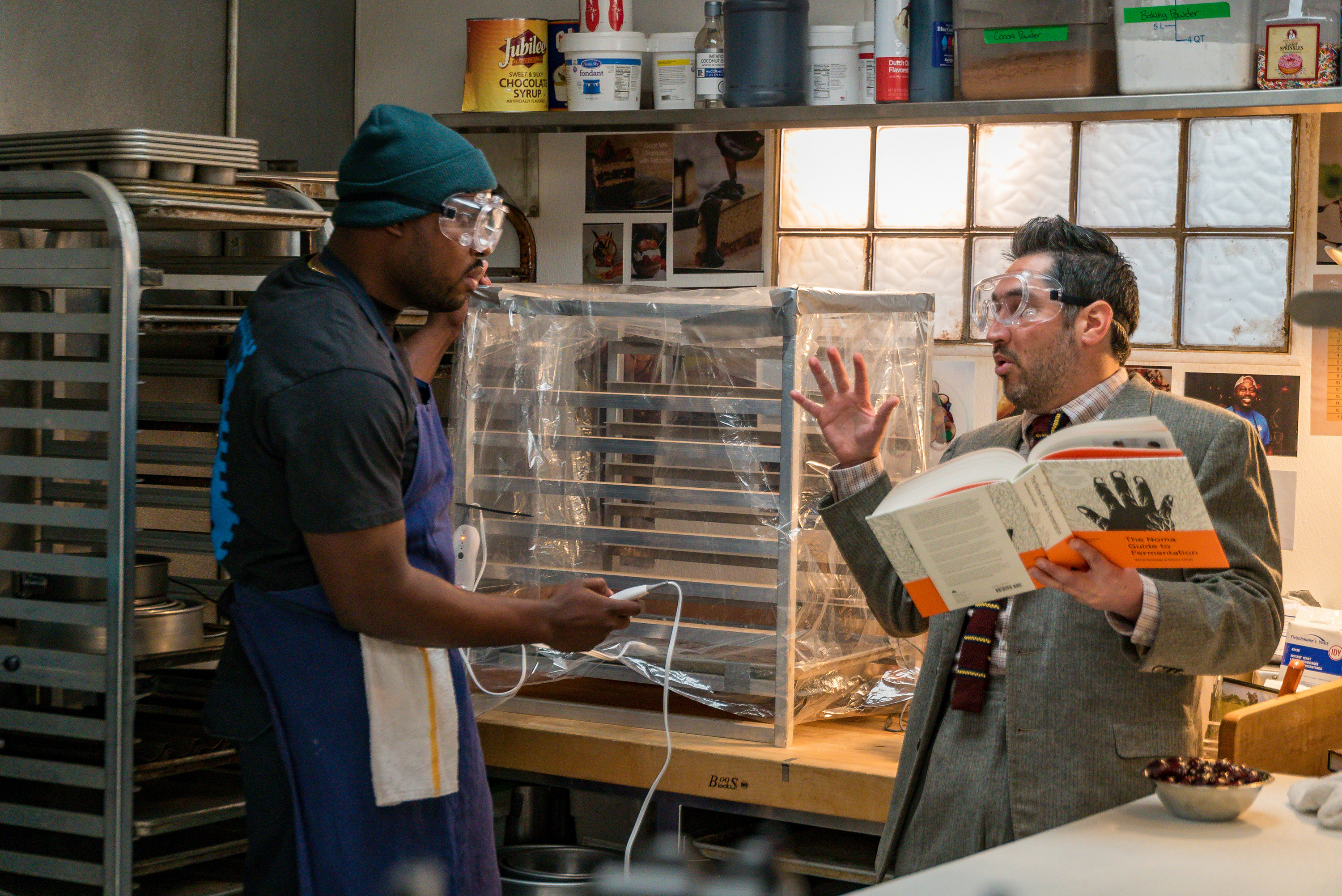
Oh, interesting. The Bear. I had a general with Chris Storer before I even auditioned for The Bear and he did see the special and they seem to have liked it or thought it was cool. This special didn’t get me The Bear, the audition got me in The Bear. But I think him having early recognition of who I was before I auditioned was helpful, for sure.
OK. And then you tell them, Well, I’m from Chicago, so I know how to inhabit that space.
Yeah, I think they knew I was from Chicago.
I would also guess that your experiences in comedy also probably prepared you more than a little bit for working with people like Nathan Fielder.
I think he saw those train videos I used to do, and he saw my special I think he kind of can relate to being, or I can at least relate to him. You know, Nathan For You is all him dealing with real people and businesses and stuff and putting himself out there as a heightened version of himself. It prepared me in the way of like, I was like, from getting hired by this guy to write on a show that I could just be myself, you know. That writers room for that show was was really small. So it was like, I don’t have any choice but to just be myself. I think it prepared me in the way of like, I’m fully who I am and I just have to be that I suppose. Maybe in the past. I was trying to like fit something to do a good job.
Now, you know, you’re you’re talking to me from Los Angeles. What’s your attitude of L.A. now that you are there?
My attitude of L.A. now is that I really like having a backyard. I’m looking out my window right now and it’s sunny. It’s fucking nice. The weather is always nice and that helps my attitude. My attitude is you have to be extremely proactive here. If you want to do anything, if you just even want to hang out with your friends. You have to like make the initiative to hang out with everybody, because people don’t see each other the way they do in New York. You do a show in New York, you randomly run into 30 of your friends. You’re not running into people that way out here. Where it’s like a hangout. So my attitude of LA is I do like it, but it is what you make of it. You have to put yourself out there and start over again. I enjoy it right now.
How are your goals different now from when you were hustling around Chicago, hosting a show and performing everywhere?
My goals? Damn, that’s a good question. I feel more confident as a writer in terms of creating something that is bigger, whether it be a movie or a television show. So I just wanting to work toward that potentially happening one day. And hopeful that I can create something long-form. I’ve done a lot of short films, and I continue to do them. I go do to this special. I’ve been in some development processes. I hope one day I can create something bigger and longer with some friends that I think are funny. That would be really cool.
Well, you definitely have some very funny friends, and I love all of the stuff you’ve done. Like my friend Jason Zinoman said, it’s not for everybody, but it’s definitely for me. So I look forward to seeing what you do next, and talking to you about that then.
Oh, I’m down. Let’s definitely put a pin in it. Let’s schedule another one down the road. Thank you, Sean. I appreciate it.
Thank you Carmen.
 From The Comic's Comic
Leave a comment