

Episode #426
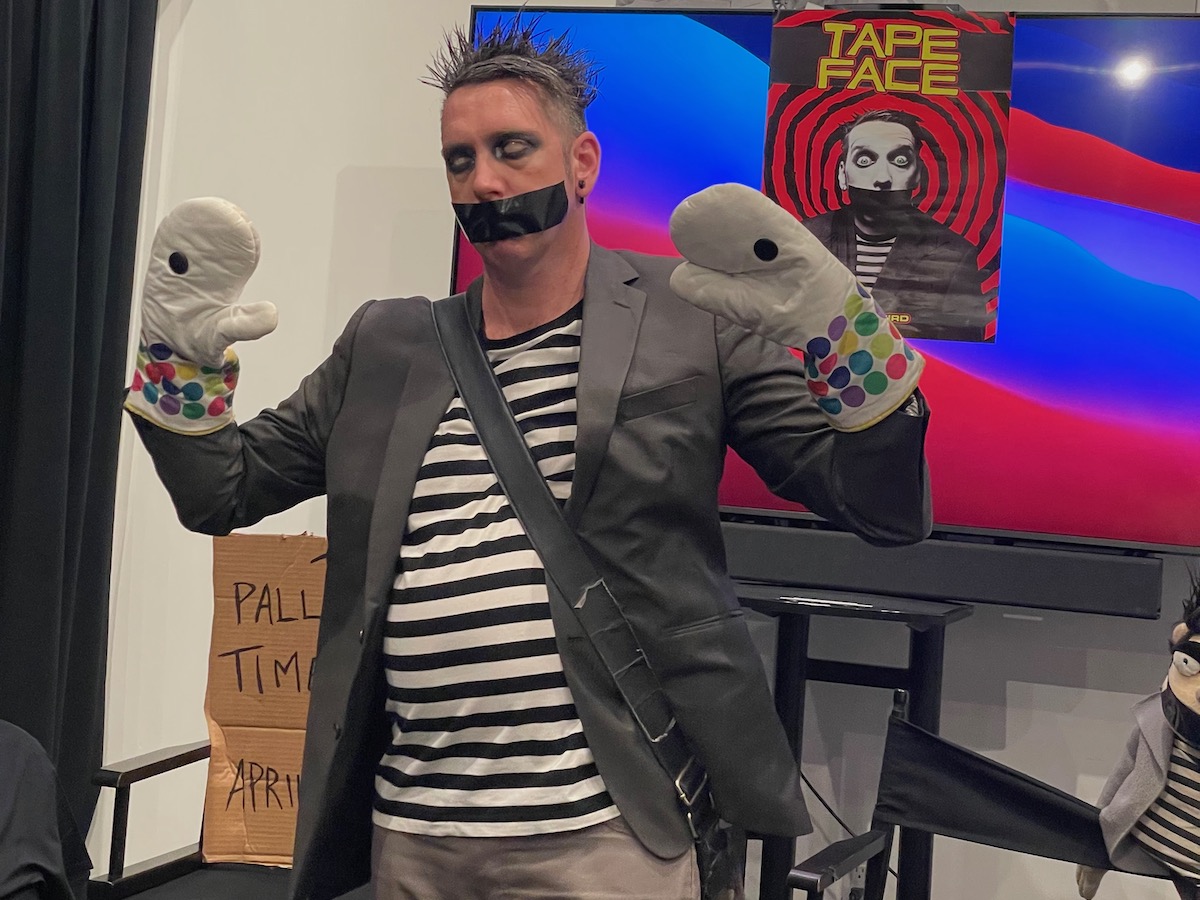
When you hear the words Tape Face, what do you picture? Sam Wills began his comedy career in his native New Zealand as a teenage clown in training, complete with a diploma from a circus school in Christchurch. But after an initial foray into stand-up comedy, his friends challenged him to stop talking so much — so he became The Boy With Tape On His Face. He received a Best Newcomer nomination at the Edinburgh Fringe in 2010, and followed that two years later with the Fringe’s coveted Panel Prize. When he broke through in the U.S. on America’s Got Talent in 2016, though, his name was shortened to simply Tape Face. Tape Face was a hit with AGT judges and NBC viewers, and he’s held down a Vegas residency ever since at Harrah’s Las Vegas. He took off the tape to speak to me in Times Square to promote one of his mini-tours away from the Vegas Strip.
If you’re unfamiliar, then please catch up with this reel of all of his AGT appearances:
Want to discover other cool Substacks? Each morning, The Sample sends you one article from a random blog or newsletter that matches up with your interests. When you get one you like, you can subscribe to the writer with one click. Sign up here.
If you’re not already subscribed to my podcast, please seek it out and subscribe to Last Things First on the podcast platform of your choice! Among them: Apple Podcasts; Spotify; Stitcher; Amazon Music/Audible; iHeartRadio; Player.FM; and my original hosting platform, Libsyn.
This transcript has been edited and condensed only slightly for your convenience.
So Tape Face, Last Things First: Thank you so much for taking the tape off for this podcast.
You are more than welcome. Otherwise it’s a very awkward interview. Mmmm mm mmmm mmm mmmm.
Well, there’s no video, so your secret is still safe. They just have to imagine placing your voice with the video. And also I just want to say last things first: I love the irony — even though it might not have been ironic at the time — that your first major award was Pulp Comedy’s Best New Face.
Hahahahaha. That was many years ago…what was it? 1990-something? 2001? Yeah, Best New Whole Face.
I have to presume that was before the tape.
That was well before the tape. That was when I was doing a circus sideshow freak show act, where I would do routines like hammering four-inch-nails up by nose, eating broken light bulbs.
Were you big fan of the Jim Rose?
Loved Jim Rose Circus. Loved the Tokyo Shock Boys. All of those guys. This was all before Jackass kind of thing. And I loved all of that style of comedy. So I wanted to push myself to learn all these stunts.
Was that what drew you? Or was there something about clowning in general?
I won an award, the Billy. T James Award, in 2005, and that at the time was New Zealand’s biggest comedy award. And everyone expected me to keep doing more shows of the style that I’d been doing. So I’m the type of person that, if you tell me to do one thing, I will want to do the other — just to annoy you. So, everyone told me to do more shows. So I went, I’m gonna do a silent character, and they were like, ‘You can’t shut up for a minute. How are you gonna do it?’ And then I went to a comedy club. I performed there as a silent clown. I tried it without the tape, and I lasted 15,20,30 seconds before I ruined it by talking to the front row. Luckily enough, I came back the next night and there was a friend of mine backstage who said to me, ‘The only way you could do a silent comedy act would be if you taped your mouth shut.’ And so that’s when the tape came about.
The Boy with Tape on His Face.
The Boy with Tape on His Face was invented there. We changed it to Tape Face when we went on to do AGT in 2016.
Was that because NBC just couldn’t handle a name that long? Or was it because you were too old to be presumed as a Boy?
You saying you can’t be a boy with a little salt and pepper? C’mon, there’s nothing wrong with that. But no. It was more for international market. We realized, everybody called me Tape Face anyway. Like, ‘Hey, Tape Face. What are you doing?’
When you first start doing that, was that still in Christchurch or was that in Auckland?
I was street performing in Christchurch, and then I developed the comedy act in Auckland, at The Classic Comedy Club.
Now I know in that period that was when Bret and Jemaine, Rhys Darby and Taika Waititi were all coming out of New Zealand. Were you part of that crew? Or were you looking at them going, ah, you’re too mainstream? I have to do something different.
They were a couple of years above me, if you think of it like school, because I remember when Flight of the Conchords got nominated for the Perrier Award in Edinburgh (the original name for the Edinburgh Fringe’s comedy prizes), I saw them, and that was the golden gem to aim for. So that’s why I started to go to Edinburgh to develop my show there and see if I could follow in their footsteps and win an award.
Right. You mentioned street performing in New Zealand. The Edinburgh Fringe, that’s like the mecca for street performing. Even more than say Times Square.
Oh, absolutely. Easy, easy. I think the Top 4 would be Edinburgh, Times Square, and Covent Garden in London would be another one.
Were you ever someone who worked well with others?
Not really. I’m a fairly antisocial type of person. So I work at a lot of these routines in my head first and then develop it from there.
I guess that makes more sense to like, first become a solo act, and then be like, I guess I’m just not going to talk.
Yeah, it’s pretty good. Especially if you’re antisocial. A lot of people should try it.
You said it was tough at first, and that’s where the tape came from. How long before you became comfortable with doing a full show?
I wrote a five-minute show originally, and it ended up being about 15 minutes, 20, 30. I think when I hit about 30 minutes, I thought — people are still watching this. This is crazy. Then I thought, I wonder if they’d watch an hour of a festival show. And so I wrote another 30 minutes and put it out there as a festival show. And people loved it. People went for it. The rest is history.
How long would you say is the typical attention span for a street performer show?
45 minutes.
Really? They can go 45 minutes.
Yeah, well that’s the amount of time you get allotted for a street performer show.
Right, but will the crowd stay for the whole time? Or will you get a mix moving in and out.
You get a bit of flow in and out, but you do get your families, your lockdown groups that will stay there the whole time.
What do you remember about your first trip to Edinburgh?
Oh, it was terrifying. It was great.
I mean, you were nominated for Best Newcomer…
No, my first year in Edinburgh was actually just street performing. I went there for research. I did my street performing during the day and then at night I saw as many comedy shows as I could. Most of the time I spent at shows looking up at the roof going: What’s the lighting like? What was the room like? Deciding on what room I wanted to play the following year.
So 2009 was the year before, and 2010 was the Gilded Balloon.
So you actually had a game plan?
Oh, yeah. I’m a fairly strategic type of performer. I think that comes from the street performing background, but I just wanted to do it right. I’ve seen so many people who would sort of rush into these things, and essentially throw away a house deposit. And it’s just like, go in their properly and see if it can work.
So many people I’ve talked to about Edinburgh specifically. I know it’s changed a lot even in the last 10 years. But especially with the Americans, every one of them I talked to say their first year was so rough because they thought they knew what they were getting into. And then they’re like, OH NO. And it’s not just that you’re performing for a month, night in night out, but you’re competing with hundreds, 1000s of shows, when you count all the different varieties of show, and not just the comedy acts. What did you do, other than being essentially a mime? What did you do to make sure that you could stand out that first year?
That first year, I think because I didn’t go — because what I’d done was, I’ve taken the show from New Zealand to Australia first Melbourne Comedy Festival and the Adelaide Fringe Festival. So I did both of those festivals like a couple of years in a row. So it got to the point that producers knew who I was, and I existed, and then it was easier to go: I’ve decided to go, who wants to produce me? And then I had my choice of where to go.
Right, you said Gilded Balloon which is one of the big four. And then two years later you go back and you win the Panel Prize.
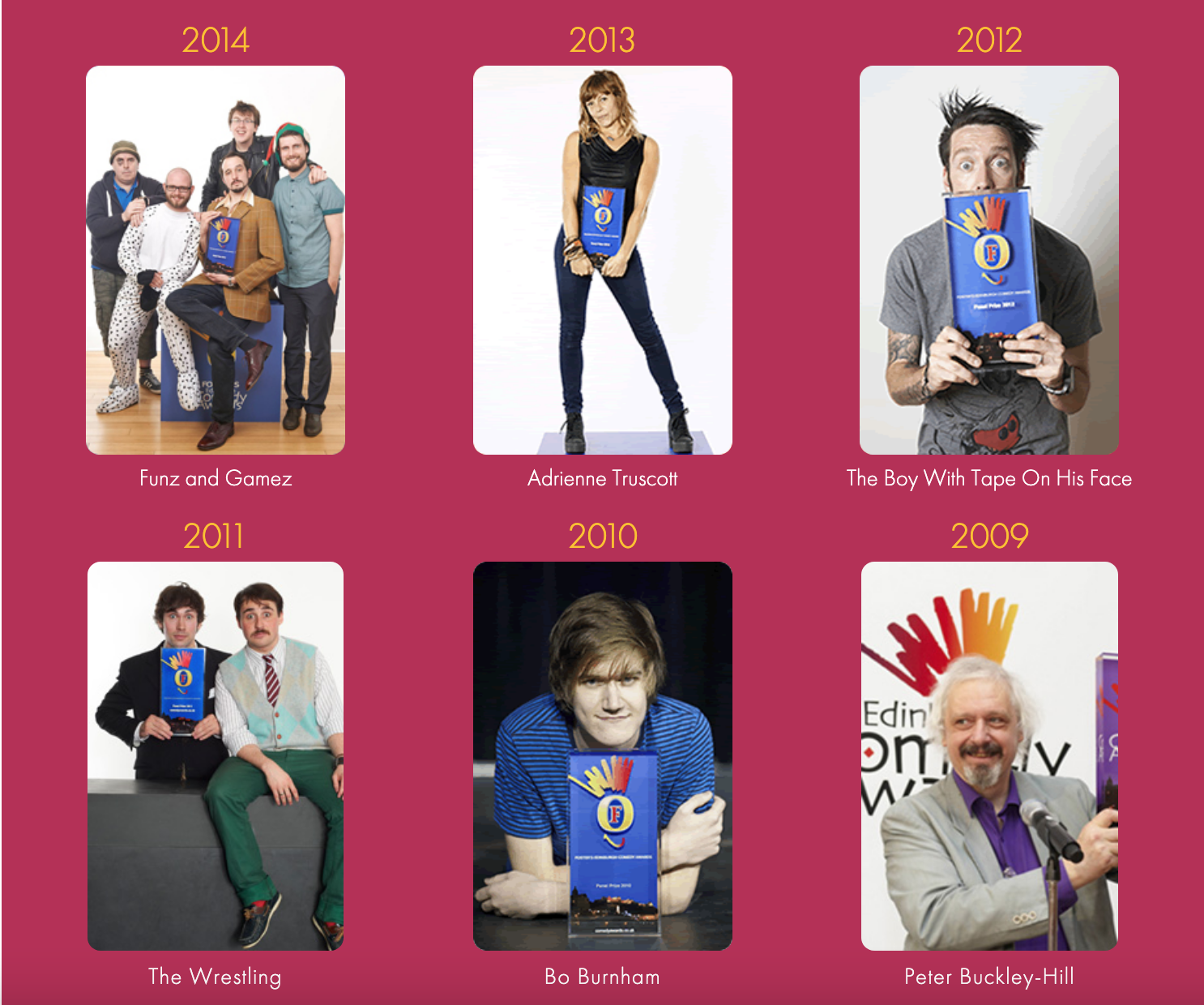
That’s because my venue was too big and I wasn’t allowed to win the main comedy prize.
That’s what it was?!?
That’s what it was. That’s what really bummed me out because The Flight of the Conchords were nominated for the Perrier. I really wanted to win the Perrier Award. But I wasn’t eligible because my venue was 750 seats.
I didn’t realize — is that still a thing now?
I believe that I was overselling there, so I wasn’t considered a newcomer, or up and coming…
I didn’t realize that was a rule, there was a loophole, you could be too popular to be the best show.
My agent had to sit me down in a bar and go I’ve got some news, and you’re not gonna like it.
I mean the Panel Prize isn’t…
The Panel Prize is fantastic. I can’t really complain because to a degree that was another tip of the hat.
What did that do for you career wise?
It just opened more doors to taking the show on tour. That sort of thing. The more we tour the show, the more it opens up to different avenues.
But it was still another what four years before you came to America for America’s Got Talent.
Yeah, I think I took a year off.
What was the calculus? Or what was the turning point where you’re like, this is the time for me to try to break into America? And this is the time for me to specifically break through on American television?
So America’s Got Talent had been after me for about three or four years, texting us all the time will you be on the show? We just never had the time. And then it just magically the stars aligned in 2016. We had a clear patch of work. I was like Do you want to go on the TV show? It’s like yeah, let’s do it. And then because the comedy scene over here, it is huge. It’s a monstrous beast of a machine. So to work your way through the comedy ranks, it would’ve taken me years. Whereas I go on America’s Got Talent, you’ve got that instant exposure, and then everyone recognizes the show, then we can just jump a few steps ahead and get the show out there.
Of course, the Got Talent franchise as a whole is such a different beast because I mean, one it’s primetime television, but also, you’re only doing two or three minutes.
It’s amazing.
So you have to figure out how to cram
all the comedy into two or three minutes, and still know how to make a connection with an audience. So they want to see
You’re trying to connect with the live audience. You’re trying to connect probably more importantly, with the judges. And then you’re trying to figure out well, this is also going to play on TV. So how does it play for them.
There’s so much involved in that show.
Do you feel like it was a little bit easier for you because you do have these self contained bits?
Oh, absolutely. Yeah, I could just pick from the vignettes, the bits and pieces, although there were some routines that just didn’t suit being on the show. I had to work through what I did have. Work with some of the other people on the show. Like I used four guys from the show to help me out with one routine.
Did you expect to make the finals?
No, not at all. After that first clip of the gloves went out and went viral? I could have gone home. I was happy with that.
And then I mean, I know you didn’t win — spoiler alert! For people who don’t have a time machine.
If you missed 2016, you missed a lot.
But even though you didn’t win, you’re one of those acts, there’s been a handful of people who haven’t won the show, but still have residencies in Las Vegas. Like I’ve had Piff (the Magic Dragon) on the podcast.
How did that come about?
I think well, that was the goal as well, was I wanted a show in Las Vegas, so to go into America’s Got Talent which mean, boost that profile. So the producers really wanting it, just gave us a little more leverage… an endorsement of sorts of going the act is good. You will want come and see this. Because there’s such an audience for America’s Got Talent. So they do come to Vegas. They do see those shows. Piff sells out his the show regularly. We sell it out regularly as well. There’s a market there.
Was that an immediate conversation with the show, or did other casinos come to you?
We had a couple of people approach us first. And then we started thinking seriously about it. OK, is this an option? This could be a thing. So let’s try AGT
And how long did it take you to adjust to the Vegas lifestyle.
It took me about a year to work it out. If you think of it like Grand Theft Auto, it makes perfect sense.
Wait. Which version?
Five. Without a doubt, GTA five is Las Vegas. I mean, there’s still cliques, there’s still clubs, there’s still games and so you got to do these little missions. It’s a bit fun.
So the first year was like being in a video game.
It felt like a bit of a video game. Yeah. I was living literally on the Strip, in an apartment. And so it was a little touristy.
Not in a casino, though.
No I had an apartment close by.
Was that your choice or theirs?
That was my choice. God, I wouldn’t want to live in the hotel. I would have gone nuts.
I guess also you would have run into so many people who would recognize you.
Yeah, yeah. There’s no hiding at that point. I’d be some weird guy walking around the casino in a bathrobe.
I mean that’s a thing, too.
I’m sure I wouldn’t be the first
With a tip jar…So what was the moment where you I guess beat the big boss and you level up from the video game. What was that moment where you’re like OK, I’ve kind of figured this out? What was that moment?
I think it was when I moved into the suburbs a wee bit. And then I realized it was a job so I could work my head around it. It’s a job, go to work, do the job, go home. So yeah, that was probably the big tipping point, getting off the Strip.
What advice from people like Piff or even other other performers on the Strip that helped you out in that first year?
Nah, they all leave you alone to fend for yourself. It’s a very good there’s a lovely community
I mean, it’s been a long time since I’ve been to Las Vegas but it seemed as though the headlining acts all kind of get along
There’s some really fun times that we can you know, go out together. Like I think it was Carrot Top was celebrating his 16th anniversary. So we all shot a video together so you had, Blue Man Group, myself, Piff. Everyone in this van being ridiculous and it’s, it is a bunch of kids being silly. That’s all we are.
So what was the start of the pandemic like for you, then?
It was tough. Yeah, I really didn’t enjoy it. Effectively, we stopped working. We took about nine months of no work available at all. Weirdly, we were one of the first shows asked back and being such an audience interactive show we found that quite interesting. So we had to write a whole new show that had no audience interaction, a lot of puppetry and that sort of thing. And slowly but surely they changed the rules on us of what we can and couldn’t do.
Right because I would I would also presume that for Tape Face’s act, it doesn’t translate to Zoom.
Online stuff. People were asking me if I was going to online and it was like nooo. One of the weirdest things that happened during the changes was they made a rule where the audience had to be 25 feet away from the stage. So what we did to fill that gap is that we bought 100 mannequins, and we put them, dotted them around the audience. Puf jackets on them put wigs on them. From the back, they looked so realistic. And so it just made the audience more relaxed, more comfortable. And then because I’m an idiot, I took huge googly eyes and put them over all of the mannequins. So when I was looking out that’s all I could see was 100 googly-eyed faces watching.
That’s still better than looking at and seeing nothing.
I’d rather than look at a mannequin than an empty chair.
I mean, that’s psychologically gotta help both you and the audience.
Because they looked realistic from the back right, so the rest of the audience feel comfortable. And we actually, we put in audience noises through the PA system. So all sorts of tips and tricks that we made it more comfortable for everyone.
How long have you been now bringing on tour? I mean, you know, we’re talking in New York City where you’re one night only. When did you start? Is this the start of you taking it on the road?
I think I’ve done about four or five US tours. It’s so tricky, though, because this country is huge. It really is. Every time we announce that we’re doing a tour. I just get messages saying: Why aren’t you coming to my city?
Well you also have to negotiate that with Las Vegas.
You’ve got to work out everything, the details are tricky
How long do you think you’ll stay in Vegas?
I’d like to stay there permanently. It’s kind of fun. I enjoy it a lot. It’s a nice spot. I call it home now. Home for the moment
From Christchurch to Sin City.
What a leap! Don’t do it all in one go. Go to some other places before you go to Vegas.
Is there ever a world where you can imagine yourself doing two different acts where you’re doing Tape Face, and then you bring back the old young version of Sam’s act where was talking.
Yeah. I’ve got an idea for a show that would involve me talking but it’s a creepy magician. So it’s a weird show like that, but I don’t know if I’ll ever do it.
If Piff can do that in a dragon costume.
I’m sure I can work something out.
Well, Sam thank you so much. I really appreciate you taking the time to talk.
Thank you so much for having me.
 From The Comic's Comic
Leave a comment